Impossible is a flexible word: My life from the ballroom to Hollywood
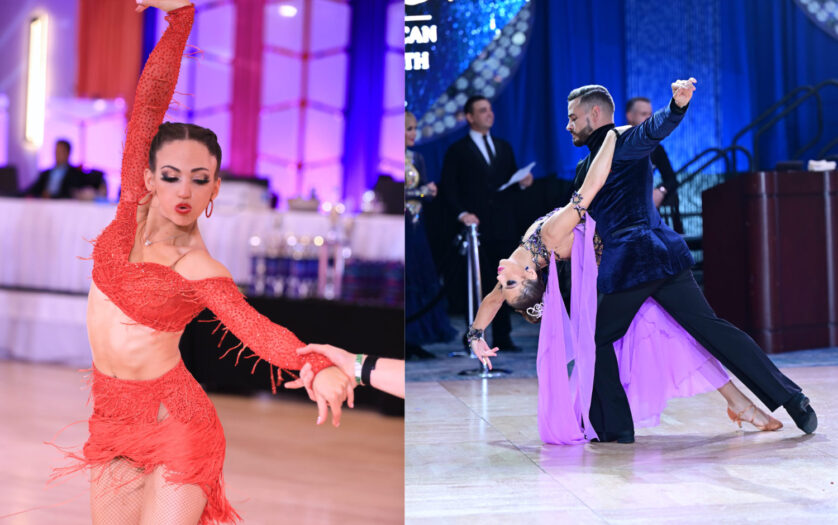
I was born missing part of my brain and told I’d never dance. I became a national champion. Now, at 25, I’m learning that I shouldn’t have to keep doing the impossible to prove I belong.
When I was eight years old, I told my doctor I wanted to be a dancer. He laughed in my face. He told me it would never happen. That it was impossible.
Today I’m a multiple-time national champion ballroom dancer. I won those titles in mainstream competitions against dancers without disabilities. I’m a professional dancer, a dance teacher, an actress, an athlete and the founder of my own foundation.
So apparently, impossible is a very flexible word.
But that’s not really the story I want to tell you. Everyone loves the part where the girl proves the doctor wrong. Fewer people ask what happens after. What happens when you’ve spent your whole life achieving the impossible, and you’re still not sure you belong?
No Auto-Pilot
I live with two extremely rare neurological conditions: Rhombencephalosynapsis (RES) and Gomez-Lopez-Hernandez Syndrome (GLHS). I’m missing the center of my cerebellum, the part of the brain that controls balance, coordination, vision and eye movement, and even emotional regulation. I’m also missing some of the important nerves in my face.
The cerebellum is a small part of the brain, but it touches almost everything. It controls not just balance and movement, but the timing and accuracy of thoughts, emotions and actions. RES affects every part of my life:
- Movement: chronic imbalance, vestibular problems and poor coordination. I can’t walk in a straight line. I veer, I fall, I drop things and bump into people. I have very little sense of where my body is in space, and I’ve never known what it feels like to feel grounded.
- Vision: I’m blind in my right eye, with low vision, limited peripheral vision and no depth perception. My eyes don’t work together. I will never drive a car, and I can’t ride a bike.
- Neurological: numbness, involuntary movements, headaches, pain and unpredictable neurological episodes. I also live with a spinal cord injury, and some mornings I wake up unable to fully feel my body.
- Cognitive and emotional: learning disabilities, slower processing, ADHD, anxiety and OCD, trouble shifting my attention and executive-function challenges. My brain and body don’t always communicate the way they’re supposed to, and stress makes every symptom louder.
When I was little, one doctor explained it this way: I have no autopilot. Most people walk, talk and eat without thinking about it. For me, walking down the street or tying my shoes takes 100% of my focus.
RES is so rare that most doctors have never heard of it, and finding care has always been its own fight. My family and I have spent my whole life making calls, explaining my diagnosis repeatedly, and searching across specialties and hospitals for someone willing to take me on. A doctor might understand one piece of what’s happening, but almost none have seen the whole picture. Some have refused to see me because my case is too difficult.
That’s one of the scariest parts of living with something this rare. When something goes wrong medically, I’m usually left without what most patients take for granted: a doctor who knows where to begin. All I’ve ever wanted is to hear someone say, “I may not have seen this before, but I’m willing to help figure it out.”
Dr. John Ruge, a pediatric neurosurgeon in Chicago Illinois, has known me since I was 17 months old. I’m the only patient with RES he has ever seen. He says I have every one of the cerebellar symptoms he would expect, and he put it plainly: looking at my brain, he wouldn’t expect me to dance. He’d be glad I could walk.
Dr. Dan Doherty, a pediatric neurodevelopmental specialist and researcher in Seattle, Washington, who has spent his career studying RES, estimates it affects approximately 1 in 1,000,000 people.
On paper, I shouldn’t be able to do most of what I do. Ballroom demands balance, spatial awareness, spotting on turns, partnering, timing and memorizing long routines, which are exactly the things my brain struggles with most. Yet, I spin in heels, dance with a partner across a crowded competition floor, and have won national titles against dancers without disabilities. I earned an acting degree even though reading is one of the hardest things I do. I compete in HYROX and CrossFit with a body that sometimes can’t feel itself. I travel alone through airports and hotels that are a maze for someone with no depth perception.
None of that was supposed to be possible. And every bit of it takes every ounce of focus I have. That’s what accomplishing the impossible actually looks like: not one big moment under the lights, but thousands of small ones nobody sees.
A Silent Disability
At two years old, I still couldn’t sit up on my own. By three, I was blind in one eye. My parents got me into occupational, physical, speech, vision and Feldenkrais therapy, and for most of my childhood it was doctors and therapists seven days a week. I still see someone at least three days a week.
But the hardest part has never been the diagnosis. It’s that most people can’t see it.
I live with a silent disability. People see someone who looks relatively typical, who can dance and compete and perform. They don’t see the effort underneath, or that I’m working ten times harder to do what comes automatically to everyone else. They don’t see the anxiety, the sensory overload, the constant mental effort it takes just to get through an ordinary day, or the 20 pills I take every day just to function. Most of the time, people don’t believe I’m disabled at all. I’ve been told I couldn’t use an accessible dressing room, even though I need to sit down to get dressed so I don’t lose my balance. Growing up, I cried to my parents and told them I wished I looked disabled, just so people would take me seriously.
When people can’t see a disability, they judge the behavior. My symptoms were mistaken for being careless, lazy, rude or difficult. People called me weird, annoying, and overly sensitive. For a long time, I believed them. I’ve always been an anomaly. Nobody really understood what I was dealing with, sometimes not even my family. I was misdiagnosed more times than I can count. I’ve never felt like I fit in anywhere.
That made for a lonely childhood. While other kids were in class, at sleepovers or on teams, I was being pulled out of school for appointments, procedures and tests, often with no one but my mom. I missed out on a lot. Because my brain doesn’t always regulate emotions or read social cues the way other peoples’ do, friendships are hard, and I have never had many friends my age.
I didn’t see anyone like me in movies or on TV. I spent so much of my life feeling alone. Oftentimes, I still do.
I’m too normal to be disabled, too disabled to be normal.
It took years, and an incredible support system, to understand that I’m not unintelligent or incapable. My brain simply processes the world differently. And different doesn’t mean less.
In some ways, it even gives me a unique perspective. I think outside the box. My mind is constantly moving, constantly creating, constantly coming up with new ideas. Sometimes my OCD and the way my brain works can be absolutely exhausting, but I’ve learned that my differences can also be a source of creativity.
When your childhood is doctors and therapy every day, you need somewhere to escape. Mine was performing.
I got through a lot of my pre-teen and teenage years by watching Dancing with the Stars and thinking about what came after: going with my mom to her pro-am ballroom lessons. I spent hours in waiting rooms watching behind-the-scenes videos of my favorite directors and choreographers, Broadway shows and movie musicals. I’ve watched High School Musical a million times. By seven, I knew I wanted to direct and choreograph.
Performing is the one place my brain doesn’t feel limited. When I’m performing, I get to be someone else, someone who doesn’t fall walking down the stairs, whose eyes work together, who isn’t the girl at the doctor’s office. For a few minutes, I am not my diagnosis.
Ballroom Changed My Life
I started taking ballroom lessons my freshman year of high school. When I did, everything changed, but not easily.
For someone who struggles with balance and coordination, competitive ballroom might seem like the least likely choice. At first, it was a huge struggle. The sport requires balance, coordination, spatial awareness, timing, memory, and the ability to move in partnership with another person. None of those abilities came naturally.
Movements other dancers learned in minutes could take me weeks. My instructors incorporated tactile and auditory cues, visual reference points, and other adaptations to help me understand movement and positioning.
Things other dancers learned in minutes took me weeks. Turns threw off my balance. With the numbness in my feet, I often couldn’t feel where they were. I can’t feel my legs or fully straighten them. I have no center of gravity and no depth perception. Flexibility has always been an issue for me, so no matter how hard I try I’ll never be able to do the splits, something I’ve struggled to come to terms with.
Because RES causes learning and processing differences, I need about twice as many lessons and rehearsals as other dancers, and every new routine takes longer to get into my body. Some days my body simply doesn’t cooperate. It took my family 18 years to find a coach willing to learn how my brain works.
For the past seven years, I’ve trained almost five days a week, for multiple hours a day. Nothing I’ve accomplished came easily. I’ve worked really, really hard for every bit of it.
But I fell in love with it: the challenge, the artistry, the discipline and the chance to tell a story without saying a word. Dance became the one place I felt invincible. It gave me something I could control in a body that often felt impossible to control, and my doctors credit it as a big reason why I function as well as I do. Dr. Ruge believes dance has actually improved my brain function and given my brain another way of coordinating itself. When the music hits, I lock in. It’s as if a different part of my brain takes over. Spinning is one of the few times my brain works in my favor: people with RES often don’t get dizzy the way other people do, so I feel more grounded when I spin.
I have earned titles across American Smooth, American Rhythm, International Standard, and Nine-Dance, among other divisions. I have competed in mainstream ballroom competitions against dancers without disabilities, wanting to be judged for my technique, artistry, and performance rather than defined by her diagnosis. But ballroom gave me something more meaningful than championship titles: confidence.
For someone who often struggled to feel connected to my body, dancing offered an unexpected sense of freedom. The same neurological differences that make everyday activities challenging do not disappear when she dances, but the music and structure of ballroom help me navigate them. Dance became a place where I could express myself without constantly feeling defined by her disability.
The Pressure of Being “Inspirational”
Off the dance floor, I’m also a HYROX and CrossFit athlete.
Somewhere along the way, I became known as the girl who could do the impossible. And that’s where things got complicated.
People often call me inspirational. I appreciate it. But sometimes I wish people understood what it takes to be me.
When you spend your whole life proving people wrong, you start to believe your worth depends on continuing to prove them wrong. Every accomplishment becomes another expectation. Every success raises the bar. And when people see you as someone who can do anything, it gets very hard to admit that some things are genuinely hard.
When I was little, I thought it was cool to be missing part of my brain. It was my fun fact. As I’ve gotten older, it’s gotten harder to accept, because I’m finally starting to understand what it really means. Dr. Doherty once said that people with RES who are truly aware of their condition can have it harder, because they really see what’s going on. That’s me.
I live with anxiety and OCD. My neurological differences make emotional regulation and processing harder, and stress makes all my symptoms louder. I try to hide it. I don’t want to seem difficult or overly emotional, and I don’t want anyone to question whether I can work professionally. But invisible disabilities don’t disappear because someone is successful.
This year has been particularly hard. I’ve had moments where I felt accepted and included, then found myself questioning whether I truly belonged. I’ve had to face insecurities I thought I’d already beaten.
For years, I thought accepting my disability meant admitting defeat. Now I’m learning that acceptance doesn’t mean giving up. I’m learning that mental health challenges don’t erase accomplishments, and accomplishments don’t erase mental health challenges. I can be a national champion and still have a disability. I can be successful and still struggle. I can be incredibly capable and still need help.
Those things aren’t contradictions. They’re just parts of who I am.
Sometimes the bravest thing I can do isn’t another competition or another impossible achievement. It’s admitting that I’m struggling.
A New Trajectory
My first love was always storytelling. I grew up acting, dancing, singing, directing and choreographing. Through elementary, middle school, high school and college I was constantly performing and spent a lot of time directing and choreographing. I directed, choreographed and acted whenever I could. But somewhere along the way, my love for it started to disappear. It wasn’t because I stopped loving it. It was because I stopped believing there was a place for someone like me in the entertainment industry.
A big part of that was reading. Reading is something I’ve struggled with my entire life, and something I often avoid because of how much effort it takes. I have low vision in both eyes and my eyes don’t work together, so following a line of text takes enormous focus and wears me out fast. It’s getting worse as I get older. Dr. Doherty compares it to taking pictures with a camera that has no image stabilization: the whole world jiggles, and everything is blurry.
Acting and directing both require a lot of reading. Good actors and good directors read and re-read scripts, break down characters and study every scene. I give 110% to everything I commit to, and I didn’t know if I physically could do that anymore. I convinced myself that this
was one dream my disability wouldn’t let me have. I stepped away and poured everything into dance, even though that was just as difficult. Because of my visual impairment and neurological differences, reading is not simply difficult. It can be physically painful and exhausting. My eyes do not work together, making it difficult to follow lines of text, and reading for extended periods can leave me unable to function normally for the remainder of the day.
For someone pursuing acting, this presented a significant challenge. Scripts require repeated reading, memorization, research, analysis, and preparation.
While studying acting, I began losing confidence in my place within the entertainment industry. I encountered professors, agents, and peers who suggested I was too normal-looking to portray characters with disabilities, yet too disabled to portray characters without them. Eventually, despite my training and lifelong passion, I stepped away from acting.
In 2026, I found my way back. I knew that if I was going to return to acting, it had to be a specific kind of role, because I didn’t want to be pigeonholed as a disabled actress. I was cast in the upcoming feature film THE ONE BEFORE THE ONE as a character who isn’t disabled, in a storyline that has nothing to do with disability. I got to be the girl who scores the quarterback.
That distinction meant everything to me. It changed my life and reminded me of what I’d dreamed about from a young age. On that project I met actor Owen Joyner, who has become a mentor to me. One of the most meaningful things to come out of it didn’t happen in front of the camera. It was much smaller. He was one of the first people my age to tell me to embrace my disability. He has helped me find my confidence again and pushed me as a creative.
Sometimes the people who change our lives don’t do anything extraordinary. They simply treat us like we’re capable of something we’ve stopped believing we can do. Getting the opportunity
to be in a movie is one thing. But finding a mentor and friend who accepts you for you and believes in you is even better.
Disability representation matters enormously. But it doesn’t always have to mean stories about disability. I want to see actors with disabilities playing the girlfriend, the best friend, the doctor, the leading lady, in stories where the disability has nothing to do with the plot. I don’t want to be hired despite my disability. I want to be hired because I’m qualified, talented and right for the job.
That’s what inclusion should look like: not only roles about disability, but disabled people existing naturally in stories about life.
In 2023 I started the Sabrina Schoenberg RES Foundation to provide grants to other kids with RES and GLHS. I have been fortunate to have access to multiple types of therapies, as well as activities like dance, theater and gymnastics. I want other people like me to find their own version of ballroom.
For most of my life, I’ve been driven by proving people wrong. That determination made me who I am. But at 25, I’m realizing there’s a difference between proving you’re capable and believing you’re worthy.
I’m still ambitious. I still want to dance professionally, build a career in film and television, create meaningful productions and advocate for people with disabilities. I believe strongly that people with disabilities should not just compete or participate in “disabled” activities.
But my greatest accomplishment might not be another title or another record. It might be accepting myself without needing to accomplish anything at all. My disability is part of my story. It isn’t my entire story. And I’m finally beginning to write the next chapter.
About the Author
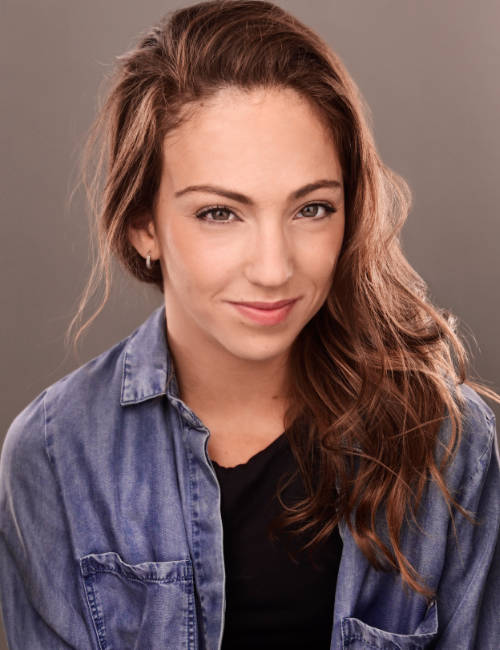
Sabrina Blair is a professional ballroom dancer, actress, adaptive athlete, producer and disability advocate based in Chicago. A multiple-time national ballroom champion with a B.A. in Acting from Columbia College Chicago, she appears as Julie in the upcoming feature film The One Before the One and is the subject of a upcoming documentary. She also founded the Sabrina Schoenberg RES Foundation to support individuals and families affected by RES and GLHS. .
Featured Stories
-
 December 3rd – A Day of Dignity, Rights, and Shared Humanity
-
 What living with cerebral palsy means to me
-
 Changing attitudes starts with inclusion: disability belongs in public life
-
 Beyond awareness – Developmentally disabled people need protection
-
 Limiting the vote for individuals with intellectual disabilities is limiting democracy