When Walking Stick Changed the Way I Saw Accessibility
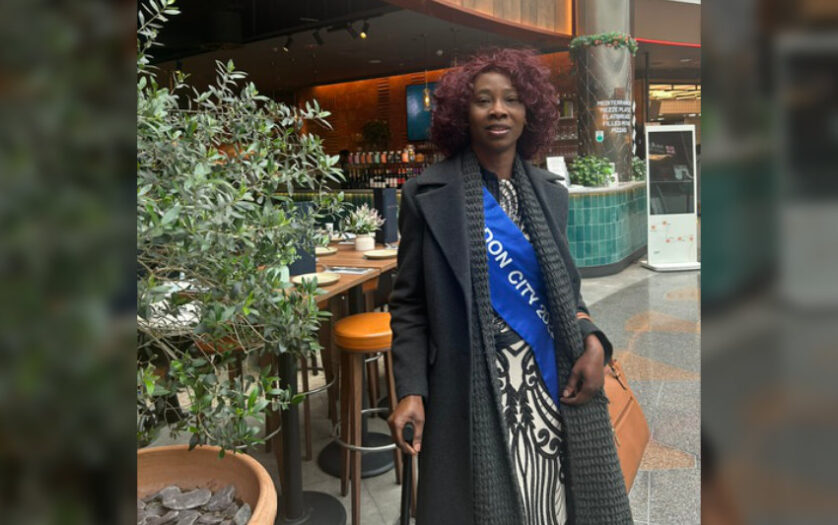
Before I needed a walking stick, I rarely thought about how many people depend on mobility aids to navigate everyday life.
Then I became one of them.
Living with multiple long-term health conditions and disabilities has changed my understanding of accessibility. My experiences include ME/CFS, fibromyalgia, Functional Neurological Disorder, balance difficulties, Ménière’s disease, migraines, tinnitus and neurodivergence, among other health challenges.
But disability is not always visible, and even when it is visible, people often see the mobility aid before they see the person.
Using a walking stick gave me a different perspective. I suddenly noticed steps, uneven surfaces, distances between seats, the availability of accessible toilets and how exhausting it can be to move through spaces that were never designed with everyone in mind.
Things I had previously taken for granted became considerations:
- Can I get there safely?
- How far will I need to walk?
- Will there be somewhere I can sit?
- What happens if my balance suddenly becomes unreliable?
These questions can influence whether someone decides to attend an event, travel somewhere new or participate in everyday activities.
My disability has also affected the way I process information and communicate. I am neurodivergent and dyslexic, and I can sometimes need additional time to process information, particularly when there are multiple instructions or sources of information involved.
This has taught me that accessibility extends far beyond ramps and lifts.
Accessibility can mean clear communication, appropriate information, additional processing time, accessible digital content, flexibility and understanding.
One of the biggest lessons I have learned is that we should not assume that everyone experiences the world in the same way.
I have attended events where I have felt included and considered, and others where accessibility has felt more like an afterthought. The difference can be significant.
True accessibility is not simply about whether someone can physically enter a building. It is about whether they can participate, engage and feel that they belong.
My experiences have also changed how I think about travel and public spaces. A journey that may seem simple to one person can involve considerable planning for someone with a disability. Fatigue, balance, pain, sensory overload and access to suitable facilities can all influence the experience.
Sometimes the biggest barrier isn’t the disability itself.
It is the environment around us.
I have therefore become increasingly passionate about disability inclusion and representation. I believe disabled people should be involved in conversations about accessibility, not simply consulted after decisions have already been made.
Our lived experience is valuable expertise.
We know where barriers exist because we encounter them.
We know which seemingly small changes can make a significant difference.
And we know that accessibility benefits far more people than those who identify as disabled.
My journey has not been straightforward. There have been difficult periods, uncertainty and moments when I have had to adapt to a body that does not always cooperate with my plans.
But becoming disabled has also given me a different lens through which to see the world.
The walking stick I once saw as a symbol of limitation became something else: a tool that gave me greater independence and helped me understand accessibility in a much more personal way.
I now try to notice the barriers that others may not see.
Because the goal should not simply be to make disabled people fit into a world that was not designed for them.
We should be creating a world where everyone can participate from the beginning.
About the Author
Adeshola Akanji is a healthcare leader, disability advocate, mentor and community champion. Through her lived experience of disability and long-term health conditions, she advocates for greater accessibility, inclusion, representation and understanding of the barriers disabled people face.
Featured Stories
-
 December 3rd – A Day of Dignity, Rights, and Shared Humanity
-
 What living with cerebral palsy means to me
-
 Changing attitudes starts with inclusion: disability belongs in public life
-
 Beyond awareness – Developmentally disabled people need protection
-
 Limiting the vote for individuals with intellectual disabilities is limiting democracy

