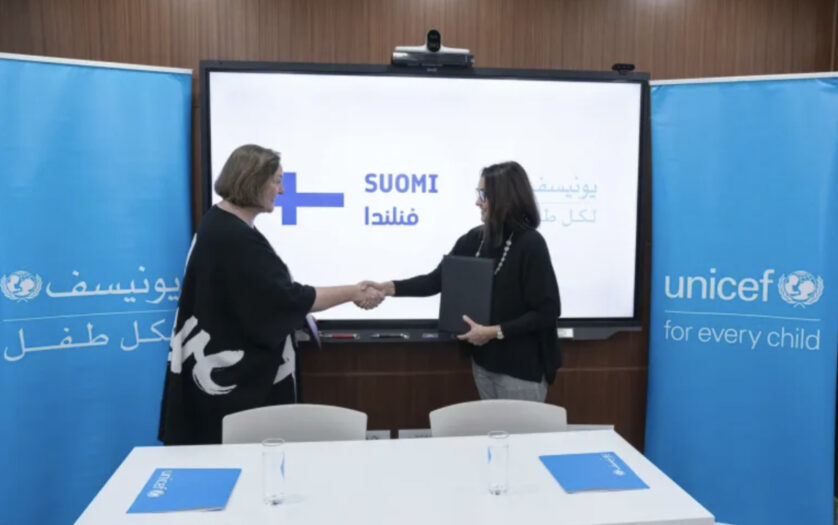
The United Nations Children’s Fund (UNICEF) and the Government of Finland have announced EUR 2.7 million in funding to support children in Syria through an integrated response focused on inclusive education, child protection, and social protection.
Millions of children in Syria continue to face barriers to learning, safety, and essential services. Many schools remain damaged or overcrowded; large numbers of children are out of school and children with disabilities remain among the most excluded. At the same time, population movements and exposure to explosive ordnance continue to place children and families at serious risk.
“Children in Syria have waited far too long for stability, safety, and the chance to learn,” said Meritxell Relaño Arana, UNICEF Representative in Syria. “This partnership with Finland allows us to reach children who are most at risk, including children with disabilities and those affected by conflict and displacement. By investing in inclusive education and protection today, we are helping build a stronger future for Syria’s children.”
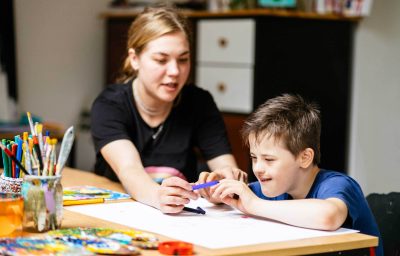
Through this partnership, UNICEF and Finland will expand access to safe and inclusive learning, strengthen education systems, and protect children from harm. The programme prioritises out-of-school children, children with disabilities, and vulnerable families through improved learning pathways, teacher support, cash assistance, and strengthened child protection services, including Explosive Ordnance Risk Education.
“Inclusion means that no one is left behind. Supporting the most vulnerable lies at the heart of Finland’s development policy,” said Ambassador Anne Meskanen. “Finland is proud to continue its partnership with UNICEF in Syria to address the needs of vulnerable children and their families, while also supporting teachers in advancing inclusive education and promoting the rights and inclusion of children with disabilities.”
The programme is implemented in close coordination with the Ministry of Education and the Ministry of Social Affairs and Labour and aligns with national priorities to strengthen systems while responding to urgent humanitarian needs.