In celebration of Global Accessibility Awareness Day, Sony Semiconductor Solutions Group (SSS Group) has formally detailed its ongoing commitment to digital inclusion, unveiling advanced technological breakthroughs designed to assist individuals with vision disabilities.
The initiative centers on repurposing advanced image sensor technologies—frequently referred to as “electronic eyes”—which possess the capability to capture hard-to-see objects with hyper-clarity and convert invisible spatial data into accessible, real-time auditory or haptic feedback.
People with vision disabilities sometimes use smartphone cameras together with voice reading functions to understand their surroundings. However, this approach requires holding the device in hand, leaving one hand occupied and limiting convenience.
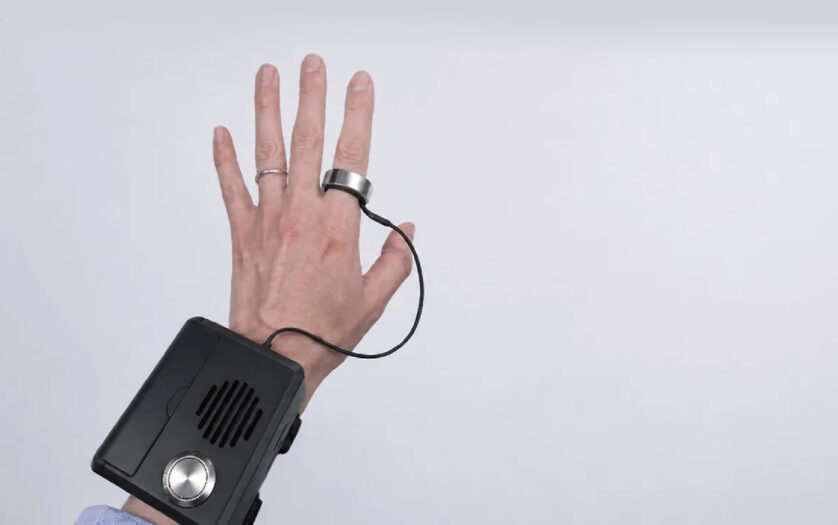
To address this challenge, engineers within the SSS Group are currently conducting proof-of-concept testing on a device known as the “Ring Camera.” Designed to be worn on the finger, the device is intended to function as an “eye” for people with vision disabilities.
The ring-shaped device incorporates a camera equipped with an image sensor that recognizes the user’s surroundings. Information captured by the sensor is converted into audio via a connected smartphone and read aloud to the user. In the future, the development team aims for the device to support a wide range of everyday situations—such as reading signs and maps in train stations, identifying product packages while shopping, and detecting nearby obstacles or traffic signal conditions while walking.
The ring form factor itself has been carefully considered. Because the device keeps both hands free, it is convenient to use while walking or carrying items. In addition, the gesture of “holding out one’s hand” is a natural part of daily life, and since rings blend in as part of personal fashion, the device can feel more comfortable using the device even in public settings.
The design also enables users to understand their surroundings more intuitively. When recognizing objects, people with visual impairments often first confirm them by touch and then use assistive devices when necessary. The engineers focused on this behavior and approached the project with the concept of “using the hand as an eye.” By wearing the device on the finger, users can naturally direct the camera toward objects through ordinary hand movements—as if they literally had “eyes on their hands.”
This initiative is being carried out jointly with the National Museum of Emerging Science and Innovation (Miraikan). The museum promotes accessibility initiatives aimed at creating a museum experience that everyone can enjoy, while actively incorporating feedback from people with disabilities throughout the process.