Top of page
Sports

Russian tech lab creates “smart” ball for football players with vision disabilities

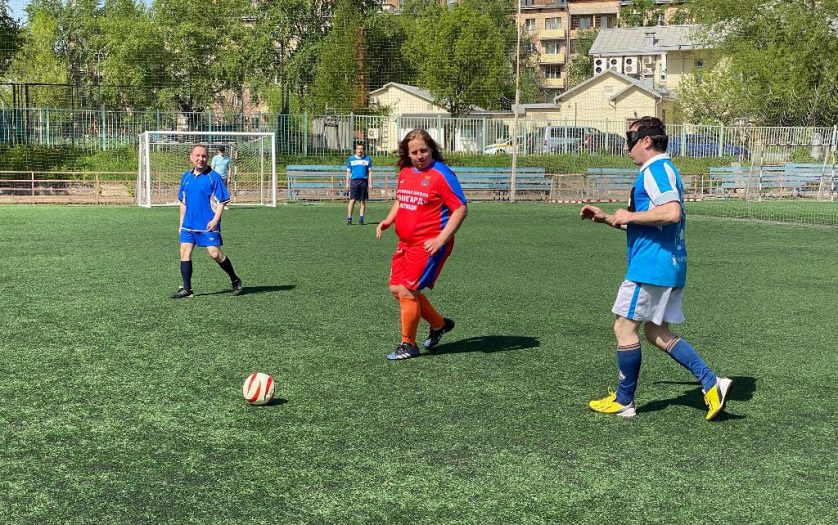
blind people playing football
Photo: So-Unity

Sensor-Tech laboratory in Russia has developed a ball that features continuous sound for football players with vision disabilities.

With grant support from the Vinchel Foundation, this “smart” ball’s constant sound allows athletes to locate it easily during the game. The ball emits noise both during movement and when at a complete stop.

The continuity of sound is generated by electric motors, a microcontroller and angular velocity sensor.  The “smart” ball can be used up to 3 hours and it charges wirelessly.

Sports teams with players with vision disabilities and representatives of rehabilitation, physical culture and sports centers can now register for test training sessions with a “smart” ball by emailing or telephoning the Sensor-Tech laboratory.

The pre-order of balls for permanent use is also available.

For more information, visit www.sensor-tech.ru

You might also like

Photo Collage of BRAVIA TVs and Audio Products to Alpha Cameras and Retail Displays Photo Collage of BRAVIA TVs and Audio Products to Alpha Cameras and Retail Displays

Sony showcases “Accessibility for All” innovations at CSUN 2026

Sony Electronics highlighted its inclusive design initiatives at the 41st…

Icon Graphic Interface showing machine thinking and AI tools Icon Graphic Interface showing machine thinking and AI tools

LG Electronics debuts AI-driven accessibility solutions at CSUN 2026

LG Electronics unveiled a suite of AI-enabled smart home and…

A closeup of a woman typing on her laptop, her fingers swiftly navigating the keyboard as she inputs data. A closeup of a woman typing on her laptop, her fingers swiftly navigating the keyboard as she inputs data.

Women face higher workplace risks from AI than men: ILO

A new report finds that women face higher risks, as…

Biovotion Everion wearable device Biovotion Everion wearable device

Wearable sensors may help identify people at risk of worsening disability

Wearable sensors may help identify people with multiple sclerosis (MS)…