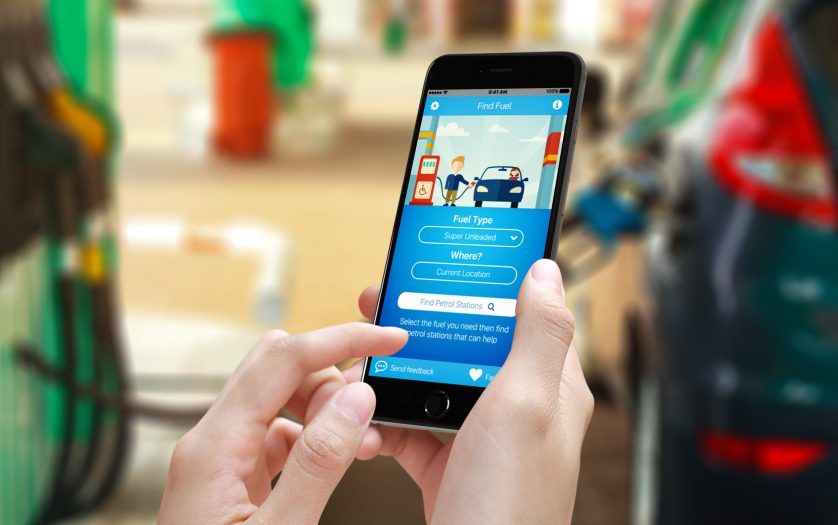
Self-service gas stations can be a challenge for people with disabilities who wish to top up on fuel or gas self-driven vehicles, adding to mobility concerns. But an App service will make it easier for Canadians with disabilities to buy gas.
The service allows the user to send a message before getting to a gas station to inform the driver’s need when the driver reaches the designated pump.
Fuelservice initially launched in the United Kingdom and came to Canada for pilot testing, thanks to Barry Munro, the chief development officer for the Canadian Spinal Research Organization. The App will benefit Canada’s two million drivers with disabilities.
“I fell in love with the app right away and thought it was a great idea,” he said. “Shell started with a pilot [in Canada] for a couple of years. Now, it’s national.”
The App was initially running in Toronto, Montreal, and Vancouver, but is now functional coast to coast, helping direct drivers with disabilities to 1,300 gas stations.
When David Onley got his driver’s license back in 1969, all gas stations were full service — a boon to disabled Canadians.
In the 50 years since, though, they’ve disappeared, so when Onley needs to fill up, he’s got to do it himself.
“Refuelling my van at the local station is difficult at the best of times, and in the winter, it can even be treacherous,” he told CBC Toronto.
Eddie Rice, co-chairman of the Canadian Coalition for Mobility Challenged Drivers, also helped bring about Fuelservice’s Canadian debut.
After watching full-service stations dwindle to a “precious few,” he was inspired on a trip to Florida where he saw buttons on gas pumps that could be used to summon help.