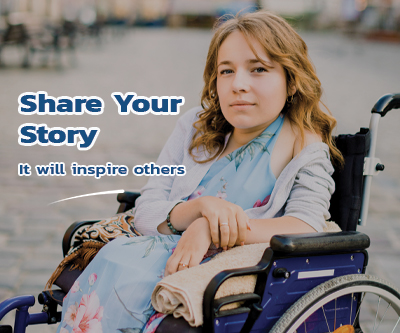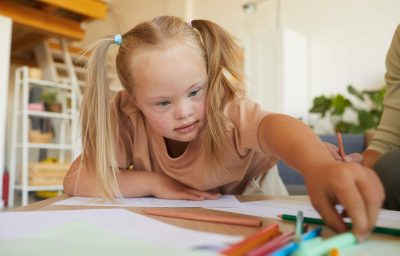
Most learners with disabilities in South Africa were simply left without any support to continue learning during the COVID-19 lockdown — in spite of their arguably greater need for educational stability, say two prominent experts on education and child rights.
Despite efforts by stakeholders at constructive engagement, the Department of Basic Education has simply failed to ensure that learners with disabilities are adequately supported in these most challenging of times, opine Robyn Beere is deputy director of the Equal Education Law Centre and Anjuli Maistry is a senior attorney at the Centre for Child Law.
As a last resort, the Centre for Child Law represented by the Equal Education Law Centre has filed an application to compel the Department of Basic Education to live up to its own motto of “No child left behind!”.
A successful order will see the department develop guidelines for all types of disabilities, support schools with infrastructure capacity in hostels, and ensure that learners with disabilities who remain at home will be adequately supported.
It has been more than three months since the national lockdown was declared in South Africa due to the Covid-19 virus. In an effort to curb the spread of the virus, schools were the first public institutions to be closed, with children’s access to education and crucial development services suddenly interrupted.
While there has been extensive debate on the impact of the pandemic on children generally and the closure/reopening of schools, there is little recognition that learners with disabilities have been and continue to be left behind.
As the initial lockdown period was underway, discussions quickly shifted to ensuring at-home support for learners. In this respect, the department made some effort to ensure that learning materials and lessons were available to learners on their website, TV channels and the radio. But a crucial consideration was evidently missing from this planning — any consideration at all that the materials needed to be accessible to learners with disabilities. As a result, during this time, most learners with disabilities were simply left without any support to continue learning — in spite of their arguably greater need for educational stability.
As discussions shifted to the reopening of schools, the Department of Education began publishing documents to provide guidance to schools, teachers and other officials on the measures to be put in place to contain the spread of the virus, including hygiene standards and procedures to follow to keep both learners and teachers safe as schools reopened.
With only 501 special schools around the country, 179 are residential, and therefore accommodate a large number of learners who travel long distances to school and live in hostels.