Persons with disabilities are relying on emergency housing, and staying longer in accommodation intended for seven-day stays, because of a lack of accessible, affordable rental properties, a study by researchers from the University of Otago, Wellington – Ōtākou Whakaihu Waka, Pōneke has found.
Dr Chang Yu, a Research Fellow in the Faculty of Medicine’s Department of Public Health, says people with disabilities stayed in emergency housing six per cent more often and for five per cent longer compared to those without disabilities during the period from 2016 to 2022.
The findings are based on data from Stats NZ’s Integrated Data Infrastructure (IDI), on information from the 2018 New Zealand Census and Inland Revenue. The study included 65,000 people in emergency housing, 6,800 of them with disabilities. People were regarded as disabled if they had disabilities in vision, hearing, mobility, cognition, self-care or communication.
The research is published in the International Journal on Homelessness.
Dr Yu says emergency housing special needs grants were introduced by the Ministry of Social Development in 2016 to fund emergency accommodation, typically in motels, for no more than seven days.
“Even though it was intended to be only for brief stays, families and individuals have been living in emergency housing for three to six months on average – and sometimes up to three years – without basic tenancy rights, and in lodgings ill suited to long stays.”
He says people with disabilities are being forced into emergency housing more often because they are unable to find, or afford, private rentals suited to their needs.
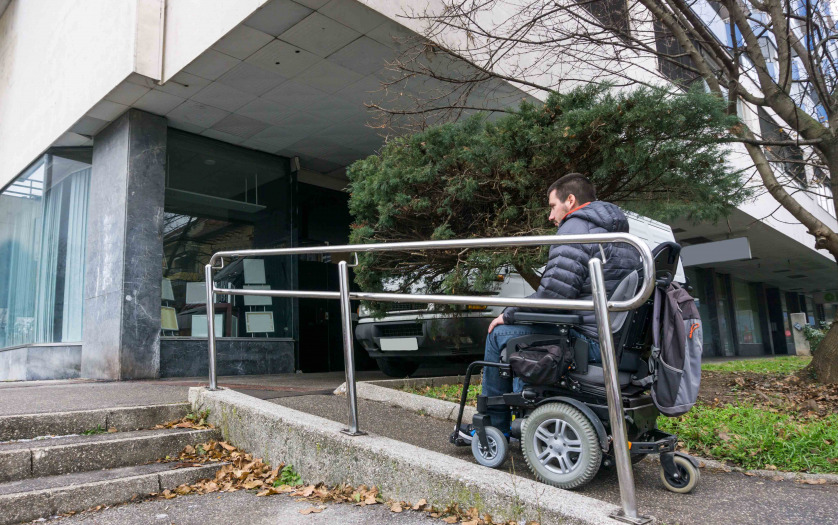
“Those with mobility issues often have specific requirements for the physical design and layout of a property, such as ramp access, wide hallways or handrails, which means there is a much smaller pool of rental housing to choose from.”
Dr Yu says the crown agency Kāinga Ora – Homes and Communities has committed to ensuring at least 15 per cent of their new public housing meets universal design standards for accessibility.
“But setting an example through state housing will not address the lack of appropriate housing for people with disabilities, given public housing makes up only four per cent of the overall housing stock in New Zealand. There is no mandate for private landlords and developers to build homes that meet universal or other disability-friendly design standards.”
Dr Yu says those with disabilities living in emergency housing were on even lower incomes than the overall emergency housing population, making their search for housing even more difficult.
“Their average income was $22,519 a year, including social benefits, significantly lower than the overall emergency housing population’s average income of $28,193.
“Given the average rental property in New Zealand costs $29,000 a year, it’s clear that people with disabilities are being priced out of most of the rental market.”
Dr Yu says the Government needs to introduce rent price regulation and find ways to increase the supply of accessible public and private housing to ensure people are not stuck in emergency accommodation unsuited to their needs.
“This is the bare minimum needed to ensure New Zealand is a place where those with disabilities have equal opportunities to achieve their goals and aspirations.”
The research paper, ‘People with Disabilities in Emergency Housing: An Analysis of a National Administrative Database’ in published in the International Journal on Homelessness.