Approximately 1 in 6 children in the United States have developmental disabilities which include physical, learning, language or behavior-related disabilities, according to the National Center on Birth Defects and Developmental Disabilities.
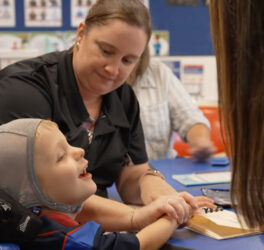
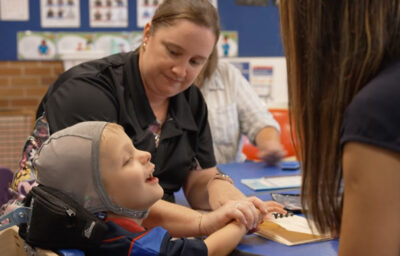
Students with disabilities often receive accommodations (how students access and learn the same content as their classmates) at school, but teachers rarely explain them to typically-developing classmates. Children with disabilities are increasingly included in general education classrooms alongside typically-developing classmates. Accommodations such as an adult helper to work one-on-one with the student, preferential seating, or extra time to navigate the school between classes ensure the success of many children with disabilities in these settings. When teachers do not discuss accommodations or their purpose with typically-developing classmates, those classmates may have to make sense of the accommodations themselves.
The current study examined how five to nine-year-olds evaluate children with disabilities who engage in accommodation-related behavior (e.g., taking extra time on tests/assignments, going to lunch/recess early, playing games differently). The study included 122 children ranging from 5- to 9- years (61 males; 61 females) who lived in Tennessee or had recently moved from Tennessee to another state in the United States. The majority of the participants were white with upper-middle-class backgrounds (87.7%), followed by Asian/Asian American (9.8%), Hispanic or Latino (4.1%), Black/African American (3.3%), and Native American (.8%). (These categories were not mutually exclusive; parents could select more than one.) Most parents reported that their highest level of education was a master’s degree (36.9%). An experimenter showed children a slideshow where several characters with either physical (walking) or cognitive (learning) disabilities engaged in physical accommodations (e.g., goes outside to recess first) or cognitive accommodations (e.g., has an adult helper in class). Participants were asked to evaluate the fairness of these accommodations, and to provide their explanations for why characters engaged in these accommodation-related behaviors.
The findings showed that with increasing age, children evaluated disability-related accommodations as increasingly fair. Older children also demonstrated greater understanding of how specific accommodations help to address specific needs, which might account for why they judged accommodations as fairer. The research was featured in a new Child Development article with authors from Vanderbilt University, in the United States.
These findings may encourage teachers, parents, and service providers to discuss the ways that accommodations address the needs of persons with disabilities. The Society for Research in Child Development (SRCD) had the opportunity to speak with lead author Dr. Nicolette G. Granata to learn more about the research.