Top of page
Technology

Students design braille device in India 

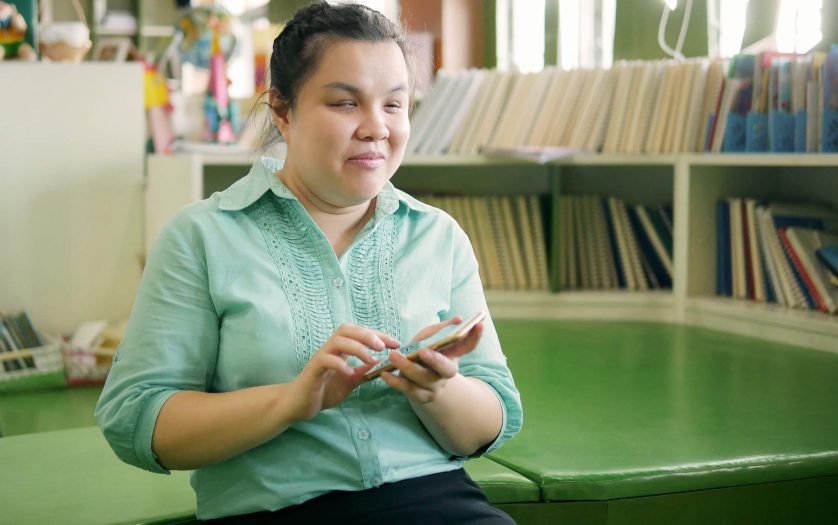
young blind woman using smartphone

Students from the Indian Institute of Technology Madras have developed a handy device for people who are blind or have low vision. 

The assistive device fits into the smartphone port and helps them type, learn, and read braille. It also allows people with vision disabilities to navigate the surrounding space and recognise people and objects independently. 

Four students, Sundar Raman P., Adil Mohammed K., Shivam Maheshwari, and Andrea Elizabeth Biju – got together to develop the device, reported the Hindu. 

Students improvised an existing product that allows people with vision disabilities to read PDF files on their smartphones. But it is a cumbersome exercise as the reader must carry a separate device. 

The team came up with Cube, a compact device that fits into the smartphone’s charging port or earphone jack. It has 4 refreshable braille cells (24 dots) on one side and a camera on the other. 

The camera on the device, along with the smartphone’s camera, is used to capture and process a wide field of view to provide the user navigation information through tactile braille cells about the proximity and nature of the obstacles. 

The refreshable braille cells project symbols to convey time, proximity to obstacles, etc. help in learning and typing on the Braille smartphone. 

Currently, people with vision disabilities rely on slow audio feedback to type. But Cube intends to change that, said Sundar. The device can be folded to the back of the phone using a flexible connector. 
You might also like

blind person hands using computer with braille display blind person hands using computer with braille display

Tanzania steps up efforts to improve access to assistive technology

As a child, Dr. Msafiri Kabulwa aspired to become an…

Icon Graphic Interface showing computer, machine thinking and AI Artificial Intelligence of Digital Robotic Devices Icon Graphic Interface showing computer, machine thinking and AI Artificial Intelligence of Digital Robotic Devices

Canada releases first standard on accessible and equitable AI

Accessibility Standards Canada announced on December 3 the publication of the CAN-ASC-6.2 – Accessible…

A young girl sits in a park, working on her laptop, surrounded by nature. Her colorful outfit and appearance reflect her energy and optimism. With a prosthetic leg, she proves that disability is no barrier to connecting with nature and embracing digitalization. This photo captures the harmony of technology, youth, and the outdoors—a powerful image of resilience and progress. A young girl sits in a park, working on her laptop, surrounded by nature. Her colorful outfit and appearance reflect her energy and optimism. With a prosthetic leg, she proves that disability is no barrier to connecting with nature and embracing digitalization. This photo captures the harmony of technology, youth, and the outdoors—a powerful image of resilience and progress.

Azerbaijan’s digital shift in disability assessments and payments

For years, people with disabilities in Azerbaijan carried a double…

Boy sitting in wheelchair in school corridor Boy sitting in wheelchair in school corridor

India’s Chandigarh unveils inclusive education policy

The union territory of Chandigarh has announced a comprehensive inclusive…