The Royal National Institute of Blind People (RNIB) has launched the first accessible pregnancy test prototype that allows women with vision disabilities to know their results privately for the first time.
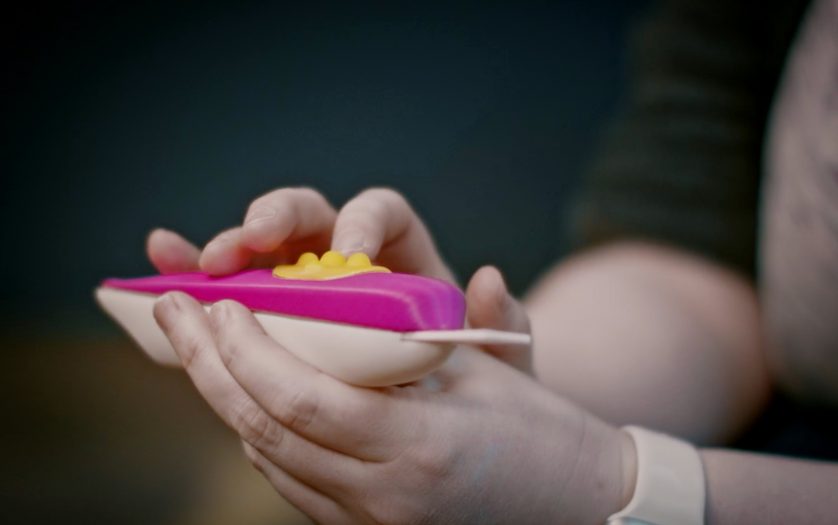
The prototype test allows the user to feel their results, producing raised nodules to indicate a positive result.
There is still no fully accessible pregnancy test, meaning that women who are blind or have low vision must ask for help to read their tests and are therefore never the first to know what is happening to their own bodies.
The prototype product has been two years in the making and features a large, tactile button that becomes raised when positive. It uses the same technology as other pregnancy tests but changes the output from a digital screen to a mechanical button.
“We wanted to design and create a proof of concept prototype to show that it can be done,” said Eleanor Southwood, Chairman of RNIB. “Accessible design isn’t something that’s far off in the future; it’s here and now, and we wanted budding designers to be able to think accessible in the future by sharing our work.”
“The problem isn’t just limited to pregnancy tests; we’ve heard incredible stories from people with sight loss of not being able to access their own medical information. From product packaging to financial information, everyone has the right to privacy and dignity” said Martin Wingfield, head of brand and marketing at RNIB.
“This prototype proves that it’s absolutely possible to make a difference to people’s lives, just by looking again at the products we use. Accessible design isn’t something that’s far off in the future; it’s for here and now, and we wanted budding designers to be able to think accessible in future by sharing them,” said Yan Elliott, executive creative director at The & Partnership.
The campaign aims to raise awareness in the design community and call on businesses everywhere to put accessibility first when designing their products and services.
RNIB and The & Partnership are also making the research and process behind the prototype freely available at DesignForEveryone.org to encourage other designers to put accessibility first.