Researchers at the University of Maryland, Baltimore County (UMBC) and the University of California, Irvine (UCI) have collaborated to create a universal design schema for navigation technologies to support persons with disabilities in moving around.
Although studies about assistive technologies and navigation have become more prevalent in recent years, the researchers have argued that current research has been too narrow given persons with disabilities.
Researchers worked with technology users with different types of disabilities to find similarities and differences in their navigation choices. They then used those findings to create a schema that can inform the design of future technologies.
The project was led by Maya Gupta, an alumna of UMBC’s information systems program and current UCI graduate student in informatics; Ravi Kuber, associate professor of information systems at UMBC; and Stacy Branham, assistant professor of informatics at UCI. The 2020 Conference on Human Factors accepted the research in Computing Systems (CHI 2020).
Although the conference was cancelled due to COVID-19, the research was published in online conference proceedings and made available as a virtual presentation on May 20. The study was funded by Toyota as part of the University Mobility Challenge to improve navigation experiences.
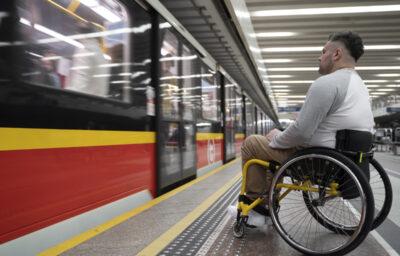
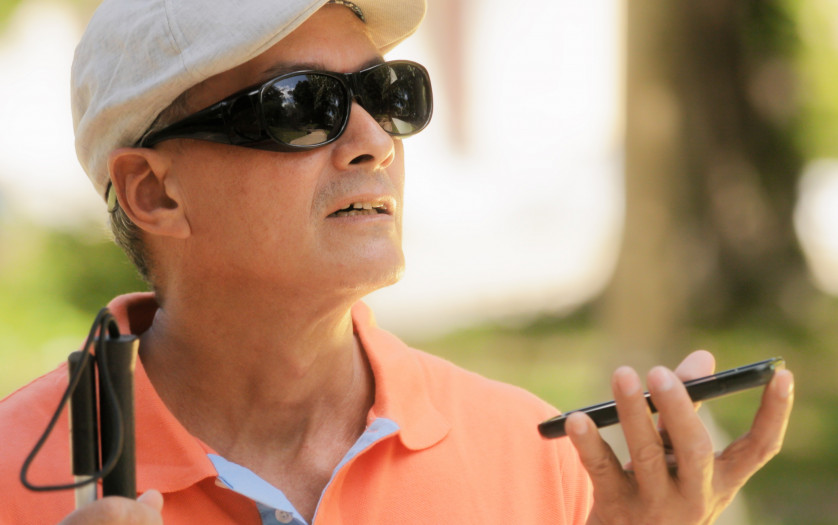
The participants in this study had visual, mobility, cognitive, and hearing disabilities and disabilities related to aging.
From the data, the researchers were able to identify the main themes within the navigation techniques used by people in this study. They revealed key similarities in preferences across people with different types of disabilities, such as experiencing difficulty navigating in the presence of a large crowd. They also noted key differences in preferences, such as the closeness of traffic. For example, people with visual impairments preferred to use the noise of nearby traffic to keep to a straight path, but it caused distraction and disorientation for others.
Based on the study participants’ preferences, the researchers were able to identify a schema for designers to use to think about the user experience for people with a range of abilities.
This fits within a relevant trend in technology design: universal usability. Creating navigation technologies that are usable for as broad and diverse a population as possible helps to promote accessibility for all users. It also decreases the stigma against people with disabilities.
UMBC Ph.D. student Ali Abdolrahmani, who has assisted in conducting interviews with participants and analyzing the collected data, has a personal interest in expanding technology for people with disabilities, as he identifies as blind.