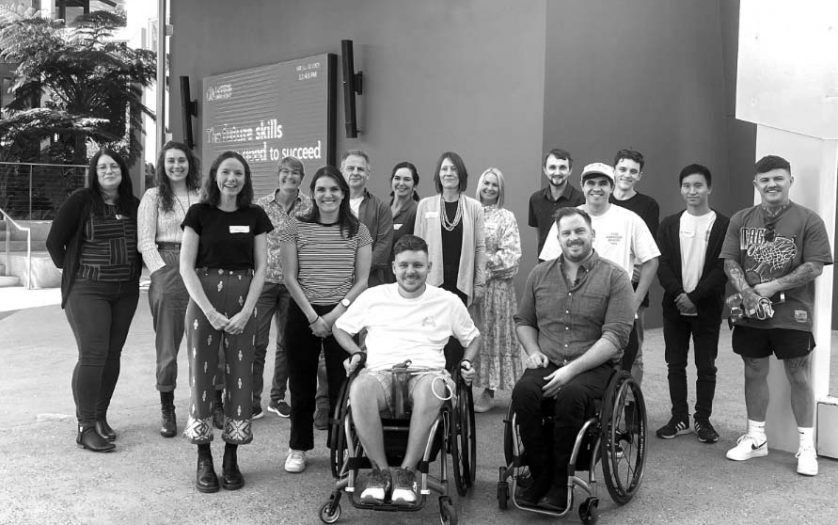
Griffith University’s Inclusive Futures: Reimagining Disability Design Cafe pilot project was such a success, its blueprint for co-design has been incorporated into a course available to design students.
The co-design initiative invited participants with disability to work alongside designers, engineers and occupational therapists to design, develop and produce solutions to challenges people face every day.
“Our co-created designs will be available for public access after they are uploaded as computer-aided design files to the public access Design Library, and the public will be able to download designs for 3D printing,” said Industrial Design Project Coordinator and Paralympian Matt McShane PLY.
“Our Design Café is a space where ideas and dreams become tangible realities and it has the potential to transform society’s approach to disability by fostering creativity, collaboration and producing cutting-edge solutions.
“A diverse alliance of people with disability, researchers, 3D printing experts, industrial designers, educators, and health and social services providers collaborate to invent unique solutions that transform lives.
“Co-design involves the end user in the design process from start to finish to ensure human-centric product design.
“It was remarkable to directly learn from users and understand their unique challenges, while actively involving them in the design process.
“The design teams have access to all the necessary equipment as well as connections to industry advisors who can help them develop sustainable solutions to the challenges many of us face in daily life.”
Harnessing co-design as a key philosophy, The Design Café project is part of the Design Hub which encompasses the Design Café, Design Library and Citizen Challenge platform.
Griffith’s Inclusive Futures: Reimagining Disability Director Professor Elizabeth Kendall said the design hub highlights the amazing innovations designed and tested by people who need them.
“Innovation doesn’t always come from scientists and high-tech laboratories because it is people experiencing restrictions in their day-to-day lives who are often prolific innovators,” Professor Kendall said.
“Such involvement has often been overlooked when designing for disability, but this event showcased a refreshing approach to human-centred design.
“Together with people who have lived experience, the program put forward new, co-created solutions for development, with the potential to provide valuable enhancements to people’s lives.
“If you’re facing barriers with day-to-day activities or if you have your own successful hack story to share we encourage you to get in touch.”