Wearable exoskeletons are increasingly being used in physically demanding jobs to support good ergonomics and augment muscular strength. In ground-breaking studies led by researchers at Tampere University and LUT University in Finland, exoskeleton vests were worn by nurses to discover how the new technology would suit the special requirements of patient care.
According to Postdoctoral Research Fellow Tuuli Turja from Tampere University, Finnish nurses expect the new technologies to reduce physical strain.
“This message from the field led us to investigate what conditions exoskeletons would need to meet in order to reform nursing,” Turja says.
“Currently, exoskeletons are mainly used in manufacturing and logistics. Isn’t it high time to introduce exoskeletons in female-dominated sectors, where musculoskeletal disorders are rampant?” she continues.
In the field of care, exoskeleton-type technology is generally utilized in rehabilitation, where patients wear the skeleton of a walking robot, for example.
“However, in our study, a very different type of mobile and light exoskeleton was worn by nurses in patient care,” Turja explains.
The research article on the intention to use exoskeletons in geriatric care work was the first of its kind in the world. The peer-reviewed article was published in the journal Ergonomics in Design, and it is openly available.
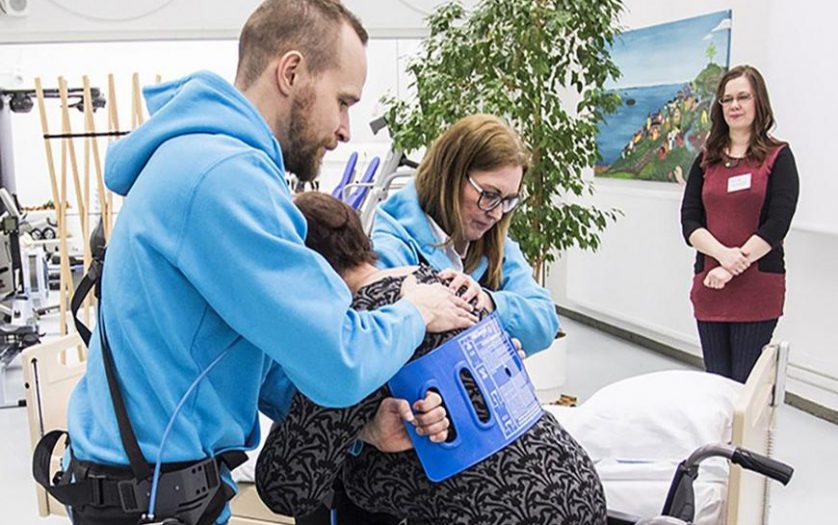
The article presents findings from two studies involving users of the Laevo Exoskeleton—a wearable back support vest, which, according to the manufacturer, alleviates lower back strain by 40-50%. In the first study, pairs of nursing students assisted geriatric patients in moving from a hospital bed into a wheelchair with and without the exoskeleton. In the second study, seven nurses tested the exoskeleton vest in a real care environment for a week.
The researchers ask whether the necessary product development could happen in Finland; perhaps Finnish manufacturers could make it possible for all the world’s caregivers to wear improved exoskeletons.