Since its inception in 2015, the Autism Navigator program, which is housed in the Autism Institute at Florida State University, has offered the bulk of its services online.
When creating Autism Navigator, the developers knew that online accessibility would be crucial to its mission of early diagnosis and intervention.
What they didn’t know was they were building an infrastructure that would prove invaluable during the pandemic shutdown of 2020 and enable them to not only meet their existing demands, but the demands of a global pandemic.
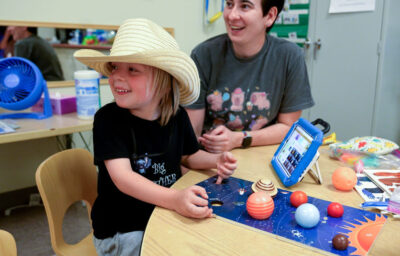
The Autism Navigator offers a suite of web-based tools and courses to guide families, teachers, therapists and doctors toward strategies that help support learning. Online courses filled with videos of families and providers gathered from years of research at the institute are used by families and providers globally on the platform.
Amy Wetherby, director of the Autism Institute and a professor of clinical sciences at FSU, said autism and delayed communication programs are typically delivered through traditional face-to-face means whether it be in-home or at a center.
That has halted due to COVID-19.
“If you just look at a child with autism, and the needs some have inside and outside the classroom, the teaching, the therapy, all of that had to come to a complete stop,” she said. “Doctors, therapists, teachers — that system which relies so heavily on in-home visits — came to a sudden stop.”
When stay-at-home orders were first issued, Wetherby continued, “Everybody had to scramble to figure out how to do this virtually. Fortunately, we had it all here ready to go.”
COVID-19 restrictions prompted a massive spike in demand for enrollment in professional courses, which jumped about 500 percent during the last quarter. The largest Autism Navigator course now reaches more than 50,000 people from 165 countries.
“To help the systems that were challenged to go virtual quickly, we offered a series of webinars beginning in March on how to virtually identify autism early and provide mobile coaching to families,” Wetherby said. “We also offered a series of new webinars to teach families how to support their child’s learning in activities they are already doing every day at home. We were amazed at the response. We had over 6,000 people enrolled in the first two weeks.”
Autism and autism related disorders can have societal stigmas attached to them that impede early diagnosis and intervention. Early diagnosis and intervention lay the groundwork for a child and their family, for results that will echo for a lifetime.