Top of page
Health

Scientists probe individual cells to find better spinal cord injuries treatments

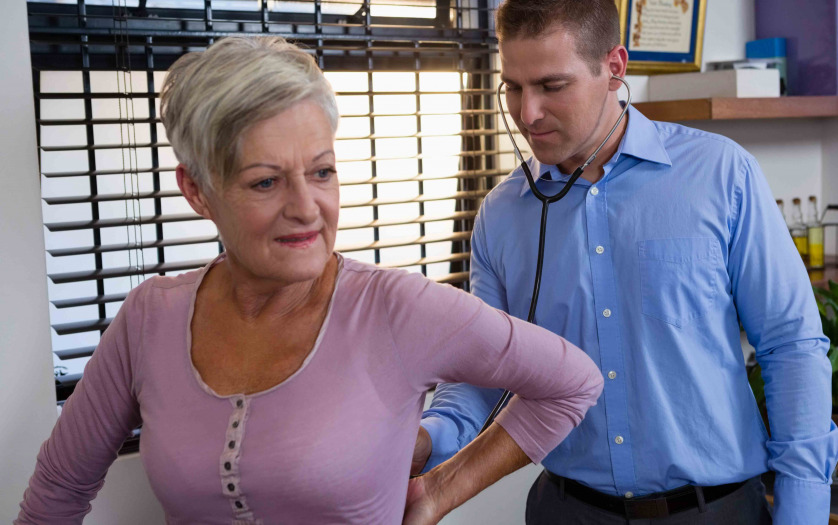
examining a female patients back

Two top scientists at the University of Virginia School of Medicine are seeking answers to questions about spinal cord injuries that have long frustrated the development of effective treatments.

The scientists, Jonathan Kipnis and Kodi Ravichandran, are teaming up to understand why critical nerve cells called neurons continue to die after spinal cord injuries. So little is known that doctors aren’t even certain if the body’s immune response is beneficial or harmful.

By understanding that process, Kipnis and Ravichandran hope to pave the way for more effective treatments, either by enhancing or limiting the immune response. Their work has received $350,000 in backing from the philanthropic Chan Zuckerberg Initiative.

“Bringing someone of Ravi’s caliber, who is a world expert in phagocytic clearance, to study questions related to brain and spinal cord injuries is exactly what this CZI initiative is about,” said Kipnis, chair of UVA’s Department of Neuroscience and director of UVA’s Brain Immunology and Glia Center, or BIG. “Merging complementary expertise and focusing on one common goal could lead to a real scientific breakthrough.”

The researchers aim to understand what happens after spinal cord injury at the level of individual cells. They’ll do this using a new probe developed by Ravichandran that causes dying cells to glow under the microscope. He and Kipnis will be able to track the dead cells as they are swallowed up by immune cells, called phagocytes, that remove them from the body.


You might also like

The Build-A-Brush includes modular components that adapt as children grow, allowing kids to select the bits that appeal to them in the moment while ergonomic forms and visual cues build self-assurance, refine cognitive skills, and encourage consistency. The Build-A-Brush includes modular components that adapt as children grow, allowing kids to select the bits that appeal to them in the moment while ergonomic forms and visual cues build self-assurance, refine cognitive skills, and encourage consistency.

Build-A-Brush: Making oral health fun and easy for children with cognitive disabilities

For many children with cognitive disabilities, daily routines such as…

pregnant woman pregnant woman

New care guidelines for pregnant women with IBD

This physician-scientist’s research changed everything for women. Here’s what she…

Patients who have suffered a stroke perform recovery activities with the help of nurses in the recovery program at Hospital Patients who have suffered a stroke perform recovery activities with the help of nurses in the recovery program at Hospital

Aussies urged to not hang up on vital stroke support service

Aussies are being urged to dig deep to ensure the…

The image of the human brain The image of the human brain

Dementia now Australia’s leading cause of death, ABS reports

The latest data from the Australian Bureau of Statistics (ABS)…