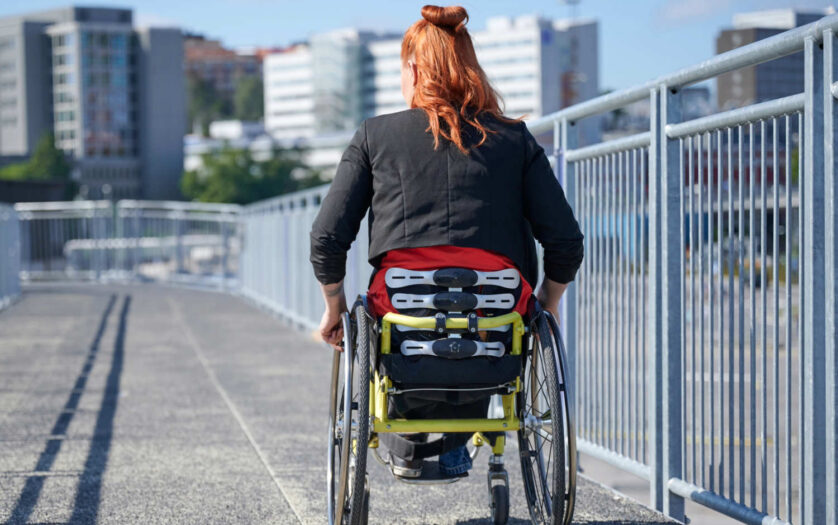
Zaragoza (Spain) won the 2026 Access City Award, for its efforts to making the city accessible for persons with disabilities. The city takes a rights-based approach, grounded in the UN Convention on the Rights of Persons with Disabilities. Its accessibility infrastructure is composed of comprehensive municipal accessibility rules, a clear strategic plan with targets, timelines, and budget, and strong governance through a dedicated Accessibility Office and a formal Accessibility Board.
Zaragoza is also leading on ensuring full participation of persons with disabilities in society, with accessible public transport, public spaces, and digital services. For example, it has a fully accessible tram network, extensive step-free pedestrian routes, inclusive banking and shopping initiatives, and certified accessible websites and apps have significantly contributed to making Zaragoza more accessible and inclusive for persons with disabilities. Housing is a particular strength, with initiatives such as the Flumen project providing inclusive, accessible homes that promote independent living and social inclusion.
Valencia (Spain) received the second prize for its city-wide, data-driven approach to accessibility. The city achieved exemplary transport and urban access, reporting 96% urban accessibility and a fully accessible bus and metro network. Persons with disabilities are employed as accessibility validators, and organisations systematically test solutions before launch.
This city was also awarded a Special Mention on Accessibility in Emergency Preparedness for embedding accessibility in emergency planning through co-designing emergency protocols and drills with organisations of persons with disabilities, trainings for firefighters, police and municipal staff, and an Inclusive Emergency Alert System.
The city of Rennes (France) won the third prize for significant progress made on accessibility thanks to close coordination among municipality services. Metro and buses are fully accessible, supported by door-to-door vehicles and apps for step-free travel. Streets have been upgraded with wider pavements, safer crossings, tactile strips, benches, and accessible toilets, while cultural venues such as the Jeu de Paume and the city arts school now feature ramps, lifts, adapted toilets, and high-contrast stair nosing. 68% of municipal sites are accessible, and a Scheduled Accessibility Agenda will bring all public reception buildings into compliance by 2027.
Salzburg (Austria) received a Special Mention for Accessibility in Housing for its structural approach to embed accessibility in housing, including new social housing and building renovations, supported by the Disability Advisory Council. This is enhanced by a free advisory service for accessible planning and housing that any resident, association, planner, architect or construction company can use. Housing allocation guidelines address the needs of persons with disabilities, with priority access to accessible dwellings in urgent cases.
Piacenza (Italy) also received a Special Mention on Information and Communications Technology for an inclusive, technology-led approach to accessibility. Piacenza uses mapping and data analysis technology to map more than 3 000 accessibility issues, guiding targeted upgrades across streets and buildings. A municipal virtual assistant and facilitation points simplify access to services.