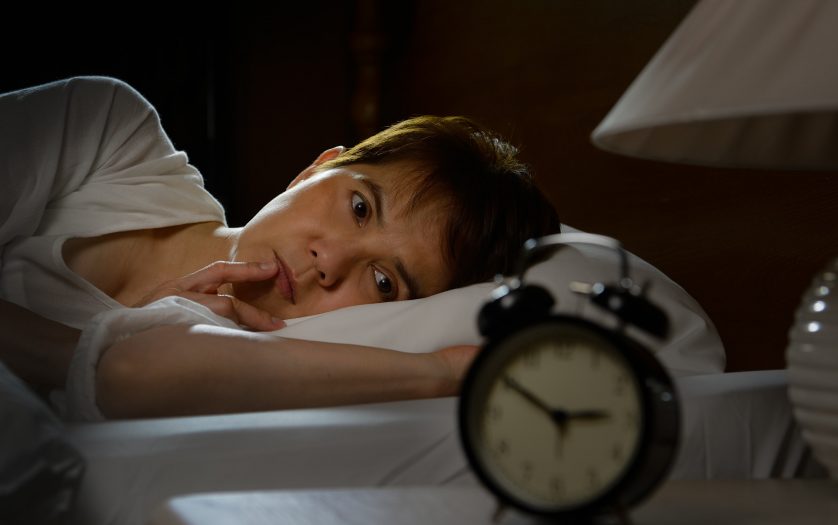
New research shows that nearly two-thirds of those with stroke in Canada show symptoms of disturbed sleep.
The dynamics between stroke and sleep – measured in both quantity and quality — are complex. Research has broadly shown that either sleep deprivation or sleeping for longer than 9 hours a day can increase the risk of having a stroke. Having a stroke can also cause changes in sleeping patterns.
Given the massive impact of stroke on global public health, better understanding its connections with sleep disturbances couldn’t be more important.
Now, a new study led by a uOttawa Faculty of Medicine research team, investigates the prevalence of sleep disturbances in Canadian adults for potential associations with stroke, a leading cause of death or disability that occurs when blood supply is blocked to part of the brain or a blood vessel hemorrhages in the brain. Their findings could help inform target interventions.
Published today in the Canadian Medical Association Journal (CMAJ), here’s what the population-based study shows: Almost two-thirds of those with stroke in Canada show symptoms of disturbed sleep. And people living with the effects of stroke were up to 7 times more likely to report multiple sleep problems compared to the general population, according to the study.
That’s significant because the current guidelines for stroke care by the Canadian Stroke Best Practices only briefly mention sleep problems in the context of post-stroke fatigue.
So what might family physicians and stroke specialists glean from this study moving forward?
Matthew Jeffers, a PhD student in the Faculty’s School of Epidemiology and Public Health who is the study’s first author, says greater awareness, guidance for treatment, and research on how to manage sleep problems in the context of stroke is needed considering that these disturbances affect the majority of those with stroke across Canada.
“Our overall goal for practitioners in the primary care setting is to increase their awareness of the high number of stroke patients with sleep disturbance symptoms. Given how common this is, it may be worthwhile for physicians to consider screening for underlying sleep disorders in patients with stroke,” says Jeffers.
One of the paper’s reviewers described it as a “well written and designed study” that “provides data on an important topic that, as the authors correctly point out, is lacking in the literature.”
To complete this study, the research team employed various statistical techniques for a cross-sectional analysis of the Canadian Community Health Survey (CCHS), a large and comprehensive national survey on people’s health status and the determinants of health.
This gave them a far better picture of how common sleep problems are in stroke across the Canadian population than previous studies, which typically have small sample sizes.
Jeffers suggests that further research will be necessary to “study groups of patients in sleep labs to get a more thorough and objective understanding of the relationship between stroke and specific types of sleep disorders, such as sleep apnea and insomnia.”
Jeffers first proposed this study during a course in Epidemiological Methods & Applications taught by Dr. Yue Chen, who helped him turn it into a publication and was one of several co-authors. He received statistical analysis help from Dr. Marie-Hélène Roy-Gagnon and support from his Faculty supervisors, Dr. Dean Fergussonand Dr. Manoj Lalu.