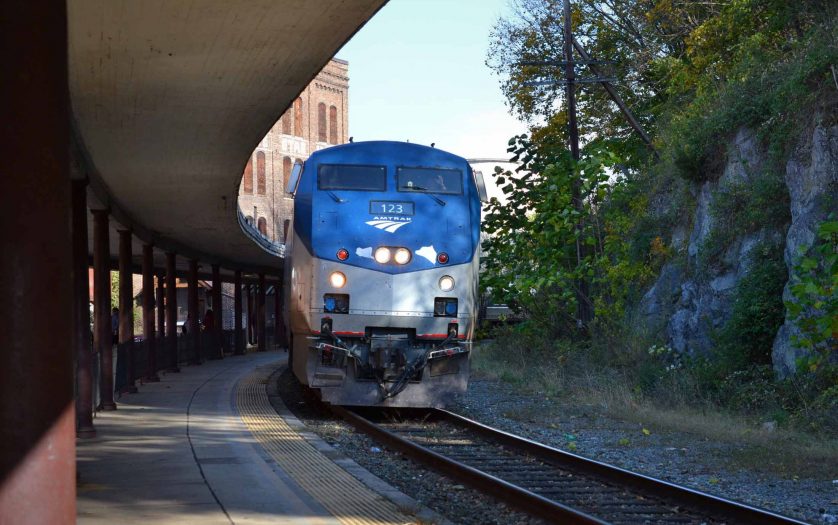
The rail transportation company Amtrak has paid over $2 million to more than 1,500 persons with disabilities who experienced discrimination due to inaccessibility while traveling by train or trying to, the U.S. Department of Justice (DOJ) announced on January 12.
The payments were part of a comprehensive settlement agreement reached on Dec. 2, 2020, to resolve the United States’ determination that Amtrak failed for over a decade to make existing stations in its intercity rail transportation system accessible to people with disabilities, including those who use wheelchairs, as required by the Americans with Disabilities Act (ADA). The payments follow a year-long process to identify victims of that discrimination.
“As a result of the Justice Department’s efforts, more than 1,500 people with disabilities harmed by Amtrak’s inaccessible rail stations are receiving compensation for the discrimination they experienced,” said Assistant Attorney Kristen Clarke of the Justice Department’s Civil Rights Division. “These payments, as well as Amtrak’s ongoing efforts to make rail stations accessible pursuant to our settlement agreement, bring both Amtrak and our nation one step closer to realizing the ADA’s promise of equal opportunity for people with disabilities.”
The December 2020 agreement requires Amtrak to make its intercity rail system accessible, prioritizing stations with the most significant barriers to access. In the next nine years, Amtrak is required to complete designs to make at least 135 of its existing stations accessible, complete construction at 90 of those stations, and begin construction at 45 more. Amtrak will also train staff on ADA requirements and implement an improved process for accepting and handling ADA complaints. Amtrak recently established an Office of the Vice President of Stations, Properties & Accessibility to coordinate its compliance with the ADA.
This action was brought by the Disability Rights Section of the Justice Department’s Civil Rights Division. To read the settlement agreement and complaint, go to https://www.ada.gov.