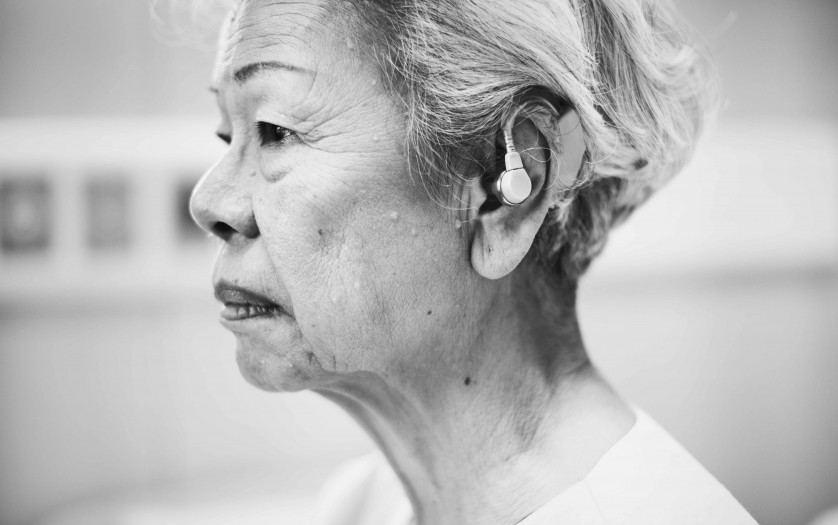
There are 48 million people in the United States with some level of hearing disability. Many use cochlear implants (surgically implanted neuroprosthesis) or hearing aids — but the issue associated with these devices is the amplification of all sounds. Group settings like in a church, theater or restaurant, the ambient noise of conversations, doors opening, feet shuffling is all being heard at once.
“They do little to help them [people with cochlear implants or heading aids] hear clearly in group settings,” said OTOjOY officials.
The company believes it has solved this problem by developing “looping” technology and installing “looping” systems in group setting environments.
“Inside of almost every hearing aid and every cochlear implant, there is a little component called a telecoil,” said James Rowe, chief executive for OTOjOY. “When the loop is installed, the sound is taken from the system in the venue straight into the telecoil that’s in the hearing aid.”
OTOjOY founder Thomas Kaufmann explained, “It’s essentially a flat wire that will sit under the carpets so there’s no bumps, and you won’t even see anything is there once we’ve completed the installation.”
The Hearing Loss Association of America (HLAA) played a huge role in attracting this technology to the USA.
Liz, a member of HLAA, recalled hearing the loop for the first time.
“I could hear that speaker as if they were standing 3 feet in front of me,” she said.
Kaufmann said they have installed 400 systems across Arizona and California, including ASU classrooms and Mayo Clinic buildings. He said 80% of all hearing aids and cochlear implants are compatible.
“It’s kind of up to people who have hearing loss to spread the word, but also its up to organizations like HLAA to let people with hearing loss know there is such a technology,” Kaufmann said.
In 2015, Tammy Collinsworth woke up to a silent world. At age 63, she contracted bacterial meningitis. Collinsworth survived the virus, but it did take away her hearing.
Collinsworth described the looping technology as life-changing. She even had her home looped so she can better understand what’s happening in her house and hold Bible studies – something she used to do before she lost her hearing.
She hopes more places decide to use it so that all people feel welcome, even those with the so-called “invisible disability” of hearing loss.
“You get with people who are in the same boat as you and we can relate,” Collinsworth said. “And that just means so much to help you understand you’re not alone. You’re not the only one.”
For more information, go to https://otojoy.com