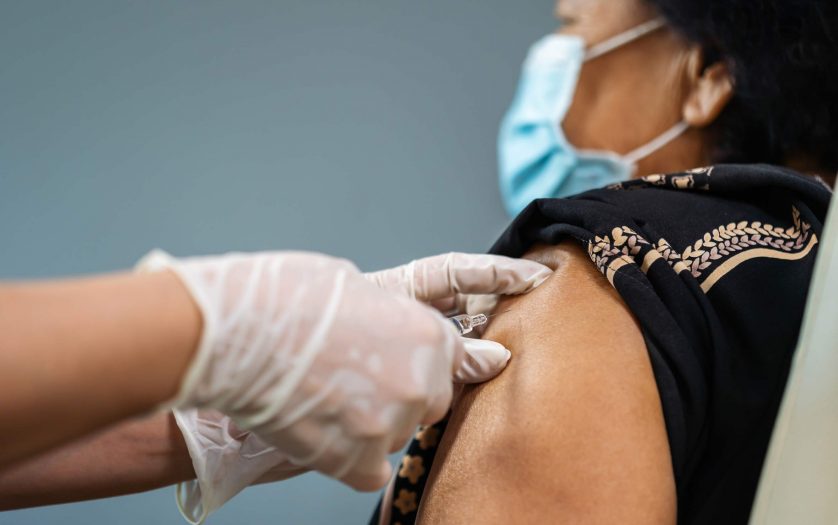
The U.S. Department of Health and Human Services (HHS), through a partnership between the Centers for Disease Control and Prevention (CDC) and the Administration for Community Living (ACL), will provide nearly $100 million to help increase vaccinations among older adults and people with disabilities.
This effort will help advance the key goals of protecting those most vulnerable and advancing equity within President Biden’s National Strategy for the COVID-19 Response and Pandemic Preparedness.
With funding from CDC, ACL will issue nearly $93 million in grants to the aging and disability networks in every state and territory. These funds will help provide critical services to overcome barriers that are preventing millions of those most at risk for serious illness and death from COVID-19 from receiving vaccines. This partnership also will provide an additional $5 million in funding for national hotlines to assist older adults and people with disabilities in registering for a vaccination and to connect them with local disability and aging agencies that can provide services and supports necessary to access them.
“The Biden Administration is committed to expanding access to vaccines, with a unique focus on ensuring those hit hardest by COVID-19 and at highest risk for severe illness or death get vaccinated,” said HHS Secretary Xavier Becerra. “Through this unique, exciting new partnership between ACL and CDC, HHS will work alongside advocates to help older adults and people with disabilities get the services and assistance they need in order to get vaccinated and have the security of knowing they are protected from COVID-19.”
These grants will provide assistance with scheduling vaccine appointments, transportation to vaccine sites, direct support services needed to attend vaccine appointments, connection to in-home vaccination options, and education about the importance of receiving the vaccine to older adults and people with disabilities. In addition, these grants will enable the aging and disability networks to identify people who are unable to independently travel to vaccination sites and to provide technical assistance to local health departments on improving access to vaccines for people with disabilities and older adults.
Approximately $5 million will help fund national hotlines to connect older adults and people with disabilities with local disability and aging agencies that can assist with vaccine registration and provide services and supports necessary to get the vaccine. This funding will increase the capacity of the Eldercare Locator, a nationwide service funded by ACL that connects older Americans and their caregivers with trustworthy local support resources. It also will leverage the infrastructure of the Eldercare Locator to provide, for the first time, a similar service for people with disabilities.
An additional $93 million in funding will be distributed as follows:
- State Units on Aging and Area Agencies on Aging ($50 million)
- Aging and Disability Resource Centers (S26 million)
- Centers for Independent Living that receive federal funding directly from ACL ($5 million)
- University Centers of Excellence in Developmental Disabilities ($4 million)
- Protection and Advocacy systems ($4 million)
- State Councils on Developmental Disabilities ($4 million)