Top of page
Technology

Scientists develop tactile camera for people with vision disabilities

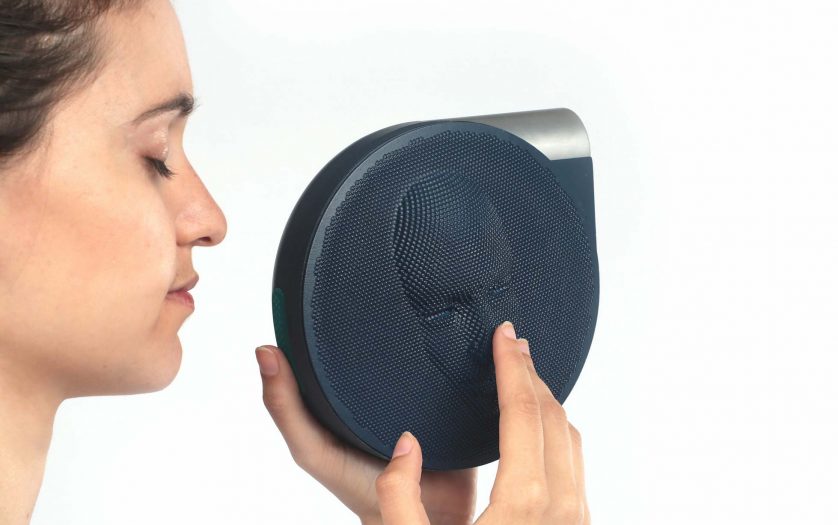
Woman using the camera

A team of researchers has designed a new tactile camera named ‘2C3D’ that enables people who are blind or have low vison to see. 

The camera creates 3D photos and videos and has a 3D screen. The screen is built by numerous 3D pixels that shift depending on the photo to forms the 3D shot on the screen surface (giving the term ‘touch screen’ a new and more literal interpretation).

2C3D is a camera that enables the blinds to see. The camera is a development and design of a tactile camera concept for people with vision disabilities. The camera creates 3D photos and videos and has a 3D screen. The screen, inspired by “Pin Toy,” is built by numerous 3D pixels that shift depending on the photo to forms the 3D shot on the screen surface (giving the term “touch screen” a new and more literal interpretation).

​The user can touch the screen while photographing and feel what the camera is seeing in real-time. When users like what they feel, they can click and save the photo. The saved 3D file can be felt again later. The 2C3D performs as a camera for blind people and as a physical-digital photo album.


You might also like

A young girl sits in a park, working on her laptop, surrounded by nature. Her colorful outfit and appearance reflect her energy and optimism. With a prosthetic leg, she proves that disability is no barrier to connecting with nature and embracing digitalization. This photo captures the harmony of technology, youth, and the outdoors—a powerful image of resilience and progress. A young girl sits in a park, working on her laptop, surrounded by nature. Her colorful outfit and appearance reflect her energy and optimism. With a prosthetic leg, she proves that disability is no barrier to connecting with nature and embracing digitalization. This photo captures the harmony of technology, youth, and the outdoors—a powerful image of resilience and progress.

Azerbaijan’s digital shift in disability assessments and payments

For years, people with disabilities in Azerbaijan carried a double…

Group Photo Group Photo

WHO launches training to expand access to assistive technology in Azerbaijan

The World Health Organization (WHO) Country Office in Azerbaijan, together…

Report calls for urgent action on neurotechnology and human rights

The Australian Human Rights Commission has released its report, ‘Peace…

Doctors performing brain surgery at TUM University Hospital Doctors performing brain surgery at TUM University Hospital

Brain-computer interface for a patient with quadriplegia

A team at the Technical University of Munich’s TUM University…