Learning to become independent is a crucial developmental milestone for all children, but for children with an intellectual disability, mastering everyday activities can be an uphill battle.
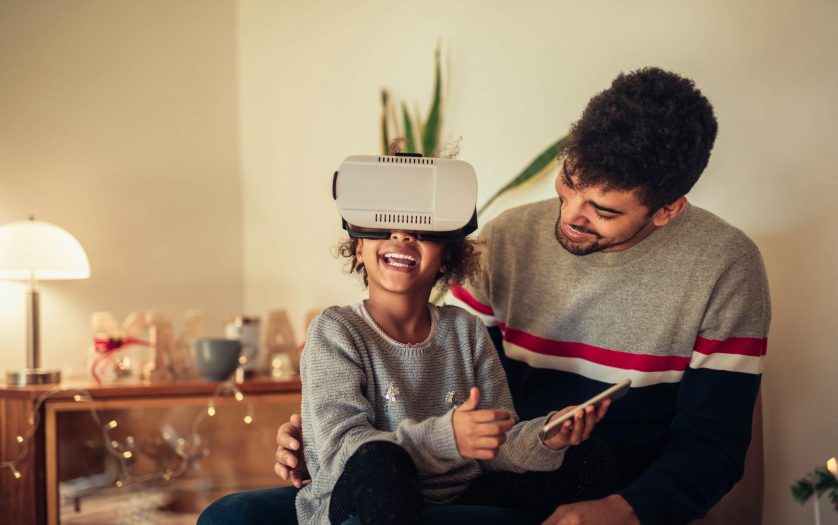
Now, a new virtual reality (VR) program developed by the University of South Australia is poised to help these children overcome some of the difficulties, enabling them to build and practice essential life skills in a safe and controlled environment.
It’s an innovative use of virtual reality platforms that could help thousands of Australian children. In Australia, around one in 22 children has an intellectual disability, representing 4.5 per cent of the Australian population.
Funded by the Channel 7 Children’s Research Foundation, the VR program aims to build capacity and self-confidence around life skills in children with an intellectual disability, enabling them to become more confident and self-sufficient.
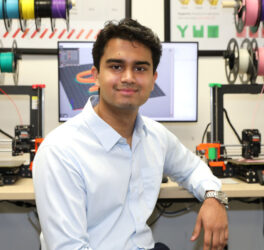
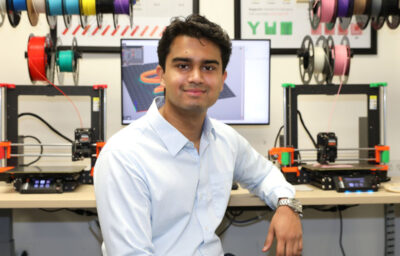
Project lead and Early Career Researcher, UniSA’s Stefan Michalski, says the VR program hopes to provide a more effective teaching platform for children with intellectual disabilities to practice key skills.
“Whether it’s getting dressed, learning how to cook, or simply sorting the daily trash, routine skills are an essential part of everyday life,” Michalski says.
“But for children with an intellectual disability, these tasks can be challenging, so finding ways for them to practice and become more independent is key.
“Our virtual reality program will let a child practice a range of life skills in a safe and controlled environment so that they gain familiarity with the task and can build their capabilities to undertake it.
“The beauty of VR is that it can be modified to complement an individual’s learning style. Plus, it easily enables repeat scenarios so a child can practice a task until they are comfortable with their abilities.
“Importantly, being able to practice in an online space means that children can safely experience and practice key skills without danger, which makes it much easier to teach higher-risk activities such as working with hot surfaces in a kitchen.”
The UniSA project will test the VR training among children aged between 12 and 17, assessing the validity and effectiveness VR as compared with traditional rote learning models.
Michalski says the research hopes to provide new and innovative solutions for children with intellectual disabilities.
“Mastering life skills undoubtedly builds confidence and self-esteem and can help a child make appropriate decisions in social, vocational and personal scenarios,” Michalski says.
arning process. And while learning skills via a virtual environment is a novel approach, it’s one that we feel will make a big difference to the many children that need extra support.”