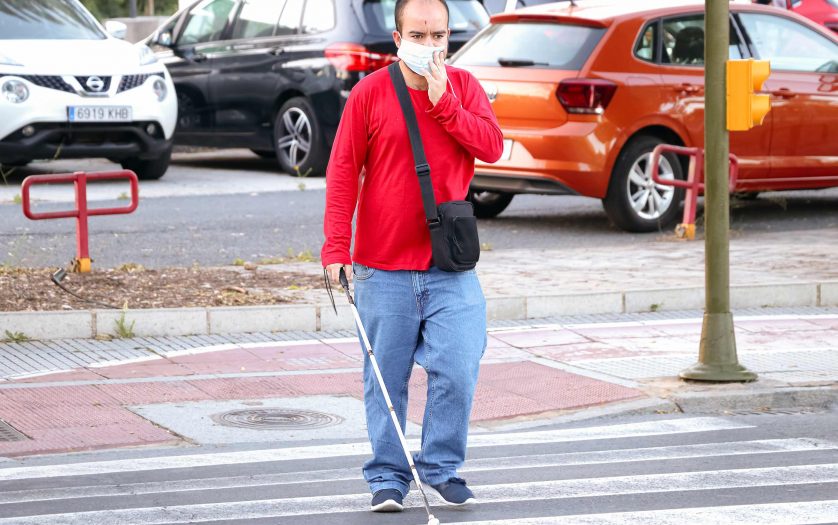
The American Foundation for the Blind (AFB) announced the release of the Flatten Inaccessibility research report, the culmination of survey findings from 1,921 U.S. participants who are blind (65%) or have low vision (35%).
The survey investigated the experiences of these participants during the start of the COVID-19 pandemic to determine how they were affected in areas including access to transportation, healthcare, access to food and supplies, employment, education, and voting.
“People with disabilities have been uniquely impacted by COVID-19, and as far as we know, this is one of the few studies taking an in-depth look at the social, economic, and civic impact for those who are blind or have low vision,” said Dr. L. Penny Rosenblum, AFB Director of Research. “While other research projects examine the risk to people with disabilities of contracting COVID-19, AFB and the other organizations behind this study had concerns about the quality of life for those most affected by community and public policy responses, such as reduced public transportation options, the quick transition mandating employees work from home, and school closings.”
The report includes an in-depth examination of the survey findings for each category, as well as recommendations by the study’s authors to address the issues highlighted by survey participants.
A brief sampling of findings includes:
- Transportation – 68% of participants had concerns about transportation, particularly related to safety, restricted access to transportation options (paratransit, public transit, taxis, rideshare), and fears they would not be able to get themselves or loved ones to COVID-19 test sites or healthcare providers if they were to get sick.
- Healthcare – 54% of participants had concerns about healthcare, and 59% felt their underlying health conditions made them particularly vulnerable to COVID-19 complications.
- Employment – 47% of participants had concerns about employment, with 38% reporting accessibility problems with at least one of the technology tools needed to do their job from home, and 22% reporting they were unable to access technology at home that was essential for their job.
- Education – 47% of parents or caregivers had concerns about their child’s education, with 60% reporting the technology tools they needed to use were not accessible and 90% reporting they received no training in the new technology.