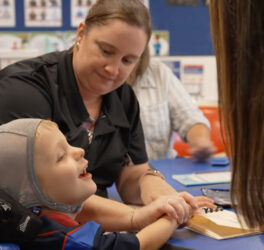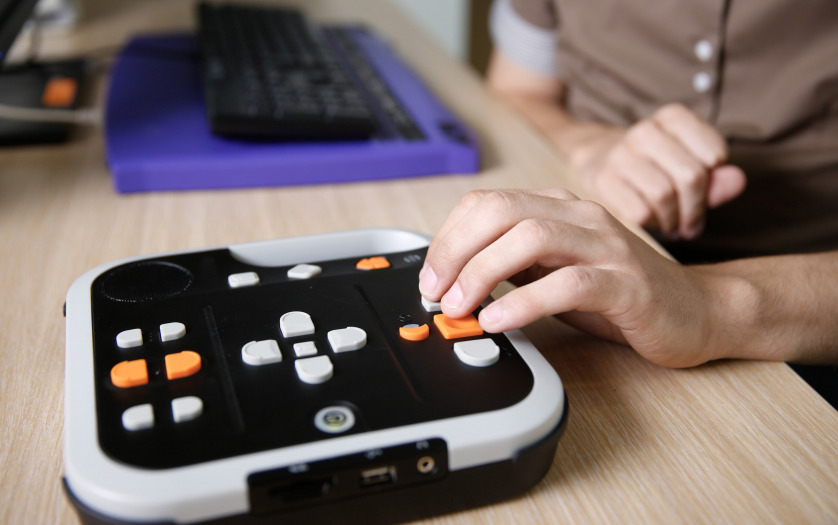
University of Dundee in UK has launched a new assistive technology course with the aim of enhancing the learning experience of students facing barriers to their education due to disability.
The MSc in Educational Assistive Technology within the University’s School of Science and Engineering will train individuals how to implement and support the use of technology within education to enable students with a broad range of learning difficulties and/or physical disabilities access curriculum.
The new course, which will launch early next year, aims to enhance the support to students who require AT by establishing the role of an Educational Assistive Technologist to ensure that technologies are deployed and supported across the service provision for learners.
“This Masters degree has been developed to address a global need for the professionalisation of the ‘Assistive Technologist’ role within all levels of education provision”, said programme director Professor Annalu Waller.
“Despite the potential of AT to enable children and young people with complex physical, learning and communication disabilities to access education, this technology is seldom adopted and often abandoned.
“This programme will ensure that skills, knowledge and working methodology are gained by Educational Assistive Technologists that are not typically taught in other programmes. Currently these skills are developed through many years of practice in AT-mature organisations.
“Educational Assistive Technologists will have the skills needed to harness and adapt AT to enable learners to access the curriculum in ways that suit them.”
The programme is primarily aimed toward teachers, therapists and technologists who are seeking to develop and enhance their ability to support learners who require AT.
Course participants already working in an AT environment will compliment theoretical learning with projects within their workplace. Students will also interact with expert users of AT within the University’s unique User Centre and placements. Once qualified, they will undertake the assessment, provisioning and ongoing support of AT systems within specialist and mainstream education or social care organisations.
The programme builds on the expertise in Accessibility and Augmentative and Alternative Communication (AAC) Technology within Computing and the ongoing collaboration across other Schools.