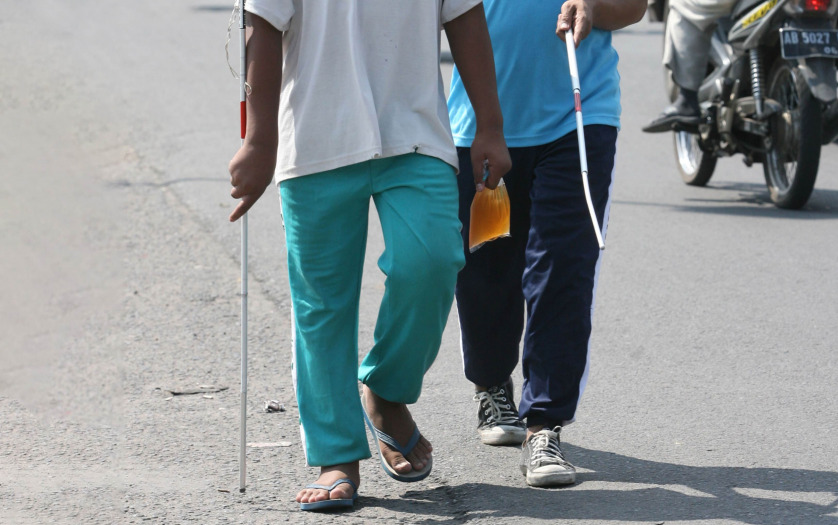
Five hundred couples with blindness who made living selling wares to commuters of Mumbai’s inter-city or local train network have been hit hard by the disruption of services due to COVID-19 lockdown with many struggling for one square meal a day.
According to the local news reports, the lives of blind families come to a halt with local trains being shut down in the wake of ongoing Coronavirus pandemic.
Haridas Varade and his wife Nanda used to sell mobile and pass covers on foot overbridges at various railway stations. They earned Rs 250 to Rs 300 every day, enough to eat and pay the rent for their one-room house in Vangani, a village on the Central line where nearly 175 blind people families live.
Haridas and Nanda are more vulnerable than other daily wage workers as they are blind. Haridas also lost his left arm in an accident two years ago. Now struggling for even one square meal a day, the couple is completely dependent on family and friends. While he lives in Vangani and receives Rs 1,100 as a disability pension, his wife doesn’t get anything for lack of documents. Haridas says the government aid is like a drop of water for the thirsty. Unable to sustain, Nanda has gone back to her village in Aurangabad with their one-year-old son.
The pandemic has thrown into abject poverty 50 percent of nearly 500 blind couples selling sundry items in trains and at railway stations in the Mumbai Metropolitan Region (MMR). If they get lucky, they get cooked meals from NGOs and political leaders, but with the rising coronavirus cases, the help has ironically diminished.
Before the lockdown, the president of the National Federation of Visually Impaired Persons, Manoj Kataria received around 25 phone calls every day for guidance regarding education, employment, legal provisions, accessibility, and social security. “Since May 1, I have been receiving 30-35 calls every day with stories of pain and desperation,” he was quoted as saying.
Kataria knows nearly 450 blind families from Ambivali, Shelu, Ambernath, Badlapur, and Titwala on the Central line, including 175 from Vangani. He says almost 90 percent of them relied on peddling their wares in trains for their livelihood.
Haridas Varade and his wife Nanda earned Rs 300 every day by selling mobile and pass covers in trains before the lockdown; now, they don’t have enough to eat.