Top of page
Technology

AI-based Item Identifier app helps blind people navigate outdoor

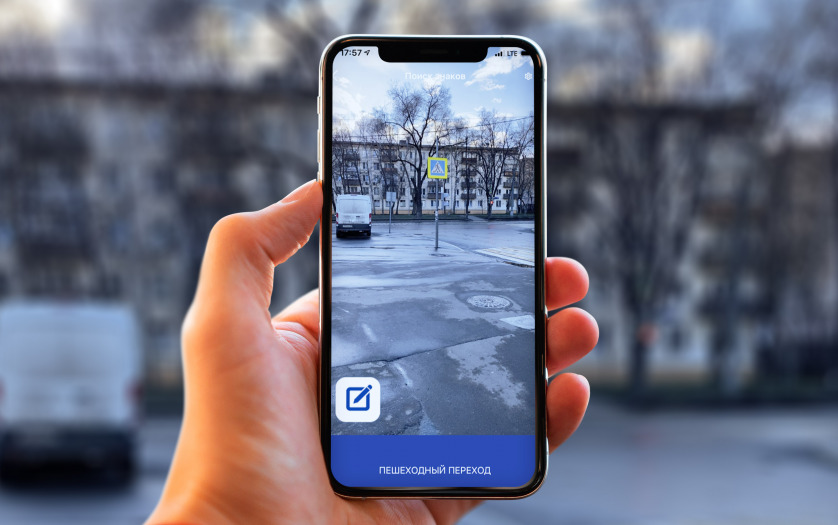
a person hand holding smartphone with Item Identifier app outdoor

The Sensor-Tech laboratory, with the support of MegaFon, has released a free “Item Identifier” application for people with visual impairments, according to the press release of the Deaf-blind support fund “Soyedinenie.” The app is available for free download on the iOS and Android platforms.

The app “Item identifier” can recognize objects, read pedestrian signs, and determine the doors and stairs.

The application works in three modes. If you select the module “Items,” it will list what is around. The neural network recognizes up to 80 objects and helps the user find the right things at home (computer, dishes, hygiene products, food) or avoid obstacles in the street, such as a car in a parking lot.

The Signs mode recognizes traffic signs for pedestrians: it allows you to find a bus stop, determine where the living area ends. Another app mode, “Door and staircase,” announces where these objects are located so that the user can find the entrance to the building and not stumble when climbing up to it.

The app works with the help of neural networks trained through machine vision. The creation of this software was made possible mainly due to another development of the Sensor-Tech Laboratory, Robin a smart assistant. This device with artificial intelligence recognizes objects; people’s faces determine the distance to obstacles and communicates this information to a blind user. “The identifier of objects” will be able to improve the quality of life of people with visual impairments, to allow them to be more independent,” said Denis Kuleshov, director of the Sensor-Tech Laboratory.

Download the item identifier application for free for iOS and Android users.

You might also like

Person using computer with AI icons Person using computer with AI icons

AI tool unveils to improve understanding of autistic communication

People with autism have brains that are wired differently. This…

blind person hands using computer with braille display blind person hands using computer with braille display

Tanzania steps up efforts to improve access to assistive technology

As a child, Dr. Msafiri Kabulwa aspired to become an…

Icon Graphic Interface showing computer, machine thinking and AI Artificial Intelligence of Digital Robotic Devices Icon Graphic Interface showing computer, machine thinking and AI Artificial Intelligence of Digital Robotic Devices

Canada releases first standard on accessible and equitable AI

Accessibility Standards Canada announced on December 3 the publication of the CAN-ASC-6.2 – Accessible…

A young girl sits in a park, working on her laptop, surrounded by nature. Her colorful outfit and appearance reflect her energy and optimism. With a prosthetic leg, she proves that disability is no barrier to connecting with nature and embracing digitalization. This photo captures the harmony of technology, youth, and the outdoors—a powerful image of resilience and progress. A young girl sits in a park, working on her laptop, surrounded by nature. Her colorful outfit and appearance reflect her energy and optimism. With a prosthetic leg, she proves that disability is no barrier to connecting with nature and embracing digitalization. This photo captures the harmony of technology, youth, and the outdoors—a powerful image of resilience and progress.

Azerbaijan’s digital shift in disability assessments and payments

For years, people with disabilities in Azerbaijan carried a double…