The Michigan State University Resource Center for Persons with Disabilities will provide electronic braille displays to all incoming students who are blind or have low vision, beginning in the fall 2020 semester.
“The transition to online learning during the pandemic has been especially difficult for braille readers. Previously these students would work with our office to receive large printouts of braille on paper for their classes. That isn’t practical in an online setting,” said Michael Hudson, director of the resource center. “With the support of our donors, we can now provide accessible braille through a refreshable display no matter where a student resides and without the challenges of paper printing and delivery.”
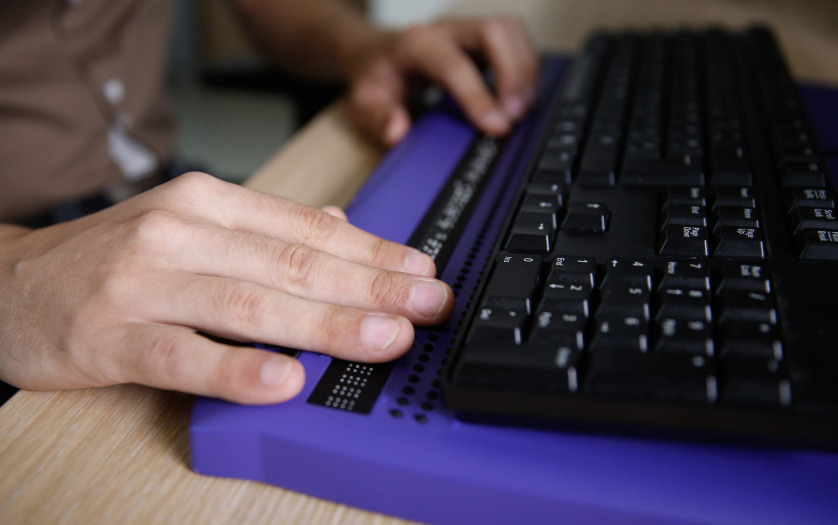
The portable display features braille pins that will raise and lower as the user reads the words in a document. It can be powered by a computer or smartphone as well as accessed wirelessly. The display will be paired with accessible books and other available campus materials.
“Pursuit of a college degree requires extensive reading and for people who are blind, that means braille. This technology will build fluency, speed availability and grow technical sophistication to assist students in reaching their fullest potential,” Hudson added. “MSU has a tradition of growing leaders and showcasing that disability need not stop progress. Providing electronic braille displays to enhance academic achievement is another way we help our students succeed.”
Each display costs approximately $3,000. The units will be provided to qualifying students at no cost thanks to the support of the Angela Sebald Ability Access Fund, Carlson Accessible Media Program and Emerging Opportunities Endowment.
“MSU approached Freedom Scientific about using the Focus Blue family of refreshable braille displays for issuance to all incoming braille readers,” said Richard Tapping, vice president for Vispero, the company that owns Freedom Scientific, who developed the displays. “Refreshable braille displays are a critical tool for blind students, and the university has shown great initiative and a tremendous commitment to ensuring they’re creating successful outcomes for all students”