Top of page
Technology

UW launches new Center for Research and Education on Accessible Technology

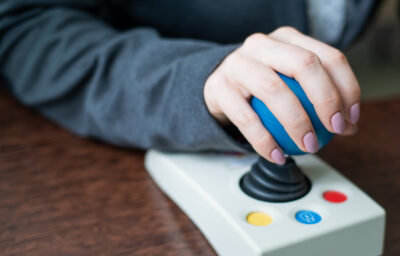
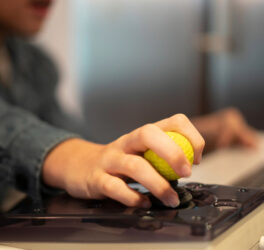
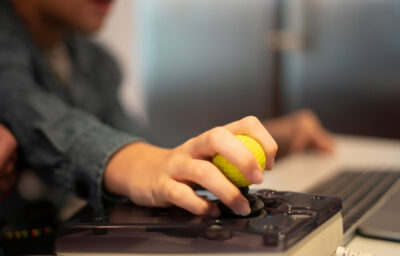
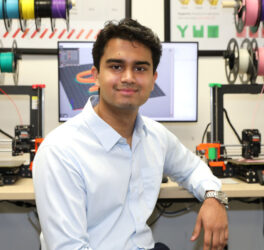
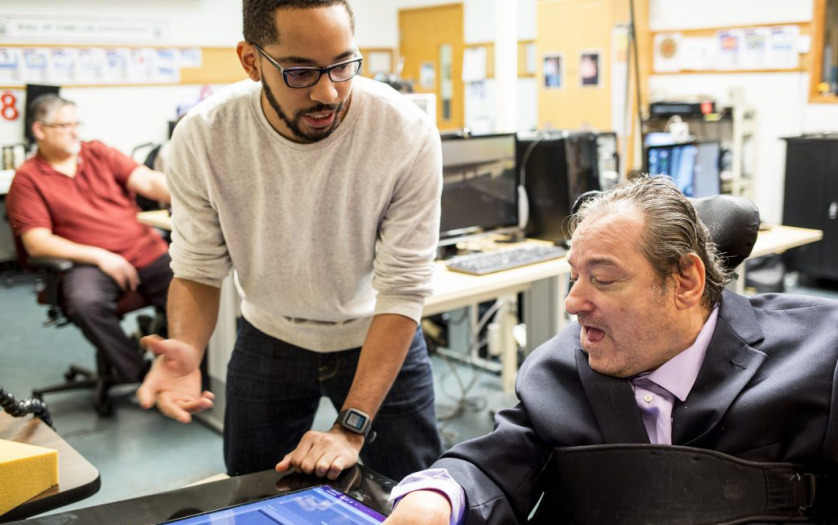
Martez Mott, left, a PhD candidate in the University of Washington’s Information School, works on Smart Touch technology with Ken Frye at Provail
Photo: Dennis Wise / University of Washington Photo

The University of Washington today announced the establishment of the Center for Research and Education on Accessible Technology and Experiences CREATE, fueled by a $2.5 million investment from Microsoft.

“We are proud to partner with the UW on their journey to build the CREATE center,” said Brad Smith, president of Microsoft.

“This is the next step in a longstanding journey to empower people with disabilities with accessibility and technology advancements. UW has truly embedded accessibility as part of their culture and we’re proud to support their next step to drive thought leadership on accessibility to empower people with disabilities.”

On the 30th anniversary of the Americans with Disabilities Act’s enactment, there have been enormous strides in the accessibility of public spaces and the availability of personal mobility technologies. Yet, equitable participation in society depends on the successful use of technology, now more than ever.

People with disabilities are dependent on technology and if accessibility is not embedded into the start of the development process then it can leave people behind. Achieving accessibility involves expertise and innovation across a range of disciplines. As a result, the major challenge of developing technology to make a more accessible world is outpacing even the most talented individual researchers and small teams.

“CREATE will help us take accessible technology research and education from small, incremental gains to true breakthroughs. This chance to advance inclusion and participation for people of all abilities is the kind of opportunity that inspires the entire UW community,” said UW President Ana Mari Cauce.

The center will build upon current projects in prioritizing and automating personalization, transitioning transportation to be accessible; augmenting abilities through wearable technologies; developing inclusive, intelligent systems and data sets; and “do-it-yourself” accessible technology production.
You might also like

Person using computer with AI icons Person using computer with AI icons

AI tool unveils to improve understanding of autistic communication

People with autism have brains that are wired differently. This…

blind person hands using computer with braille display blind person hands using computer with braille display

Tanzania steps up efforts to improve access to assistive technology

As a child, Dr. Msafiri Kabulwa aspired to become an…

Icon Graphic Interface showing computer, machine thinking and AI Artificial Intelligence of Digital Robotic Devices Icon Graphic Interface showing computer, machine thinking and AI Artificial Intelligence of Digital Robotic Devices

Canada releases first standard on accessible and equitable AI

Accessibility Standards Canada announced on December 3 the publication of the CAN-ASC-6.2 – Accessible…

A young girl sits in a park, working on her laptop, surrounded by nature. Her colorful outfit and appearance reflect her energy and optimism. With a prosthetic leg, she proves that disability is no barrier to connecting with nature and embracing digitalization. This photo captures the harmony of technology, youth, and the outdoors—a powerful image of resilience and progress. A young girl sits in a park, working on her laptop, surrounded by nature. Her colorful outfit and appearance reflect her energy and optimism. With a prosthetic leg, she proves that disability is no barrier to connecting with nature and embracing digitalization. This photo captures the harmony of technology, youth, and the outdoors—a powerful image of resilience and progress.

Azerbaijan’s digital shift in disability assessments and payments

For years, people with disabilities in Azerbaijan carried a double…