Top of page
Technology

World’s first bionic eye to give millions the chance to see again

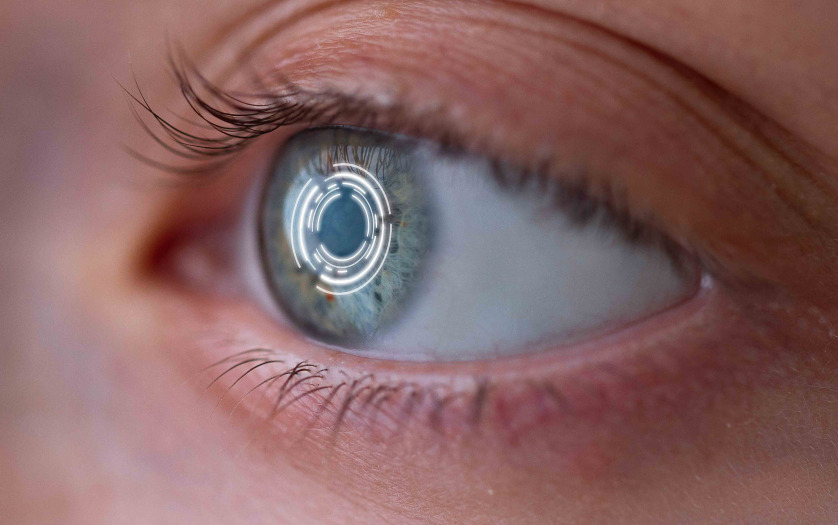
Woman's eye with lens with digital and biometric implants

Scientists have claimed a bionic eye could be here in just five years. It is the second breakthrough in the medical fight to beat blindness announced in the past month.

The world’s first 3D artificial “eyeball” creates images using tiny sensors that mimic light-detecting cells found in a human eye.

And it could even be capable of sharper vision than the real thing, say the scientists behind it.

“Our biomimetic eye has a size comparable to a human eye – a bit more than 2cm in diameter. It can be used for visual prosthesis to help people who are blind or have low vision.” said Professor Zhiyong Fan, from the Hong Kong University of Science and Technology.

“It can lead to a bionic eye.”

News of the device comes after US scientists found they could restore vision by using a device that sends images from a camera straight into the brain.

Most adults lose their sight due to damage to the eyes or optic nerve. Researchers now think implanted electrodes can be stimulated to “trace” out shapes on the surface of the brain.

That would allow people who are blind or have low vision to “see” again.
You might also like

Icon Graphic Interface showing computer, machine thinking and AI Artificial Intelligence of Digital Robotic Devices Icon Graphic Interface showing computer, machine thinking and AI Artificial Intelligence of Digital Robotic Devices

Canada releases first standard on accessible and equitable AI

Accessibility Standards Canada announced on December 3 the publication of the CAN-ASC-6.2 – Accessible…

A young girl sits in a park, working on her laptop, surrounded by nature. Her colorful outfit and appearance reflect her energy and optimism. With a prosthetic leg, she proves that disability is no barrier to connecting with nature and embracing digitalization. This photo captures the harmony of technology, youth, and the outdoors—a powerful image of resilience and progress. A young girl sits in a park, working on her laptop, surrounded by nature. Her colorful outfit and appearance reflect her energy and optimism. With a prosthetic leg, she proves that disability is no barrier to connecting with nature and embracing digitalization. This photo captures the harmony of technology, youth, and the outdoors—a powerful image of resilience and progress.

Azerbaijan’s digital shift in disability assessments and payments

For years, people with disabilities in Azerbaijan carried a double…

Group Photo Group Photo

WHO launches training to expand access to assistive technology in Azerbaijan

The World Health Organization (WHO) Country Office in Azerbaijan, together…

Report calls for urgent action on neurotechnology and human rights

The Australian Human Rights Commission has released its report, ‘Peace…