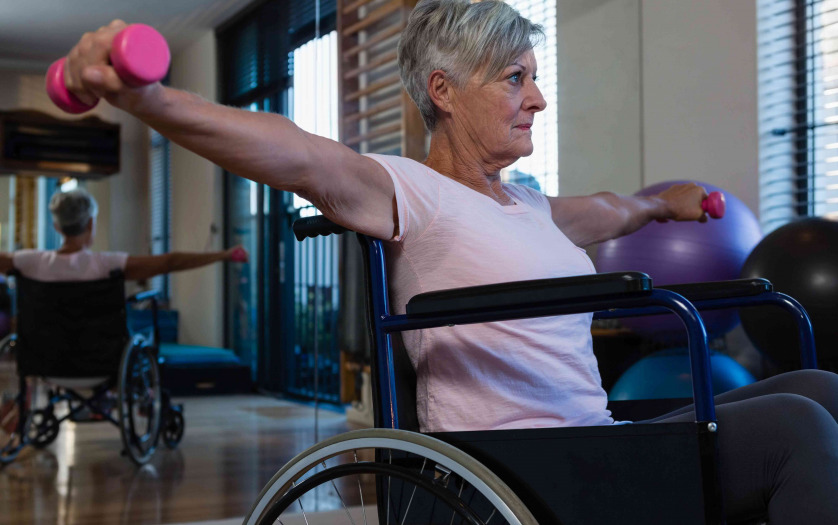
For many people, staying active during COVID-19 isolation can be a struggle. More so for people living with disabilities, says UBC Okanagan’s Kathleen Martin Ginis.
“People with disabilities are at increased risk for social isolation under ‘usual’ circumstances, but especially so during the COVID outbreak,” says Martin Ginis. “They also face unique barriers and challenges to physical activity. With the closure of adapted physical activity and recreation programs, we are very concerned about the health and well-being of Canadians with disabilities. We are offering the Get in Motion service as a way to manage some of the psychosocial and physical health risks of being inactive at home.”
Martin Ginis explains that adapted sport and exercise programs were closed across the country because of COVID-19.
“We had been talking to our community partners who were closing their programs and we were all feeling upset about the impact these closures will have on community members with disabilities,” she says. “We were all thinking ‘I wish we still had Get in Motion’ and then Amy Latimer-Cheung started the ball rolling—and got the service back up and running.”
Based virtually out of Latimer-Cheung and Tomasone’s lab at Queen’s, Get in Motion is available for all Canadians with physical disabilities, as well as for Special Olympics athletes. Participants can connect with a volunteer physical activity coach via phone or online conferencing. The volunteer then guides that person through an at-home physical activity program.
The CDPP is based out of UBC Okanagan and Martin Ginis has several students actively counselling Get in Motion participants while others are being trained.
Get in Motion volunteer Sarah Lawrason is a second-year doctoral student who studies physical activity participation among people with spinal cord injuries who walk. She was matched with someone who fits into her research population.
For more information about the Get in Motion, or to enrol in the program, go to cdpp.ca/get-involved