Top of page
Technology

Persons with disabilities benefit from from new Polish technology

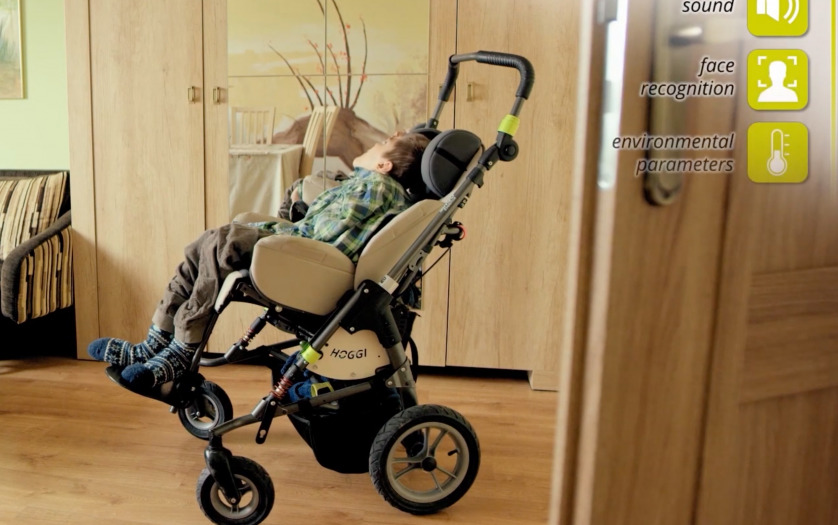
a child with disability controlling the environment at home
Photo: Insension

A unique innovation project that aims at transforming the lives of people with profound intellectual and multiple disabilities is being developed by scientists in Poland.

Called  “Insension” this European Research Project could be life-changing for some, Euronews reports.

Using and advancing technologies, like artificial intelligence and the internet of things, it provides them with a new way of communicating what they need.

For Justyna Tomczak, caring for her 8-year-old son Jeremi can be challenging. He has multiple learning disabilities.

“It is more tiring than doing something, for me. To feed him, to change his clothes or whatever. But be all the time like, how are you, what about your head, do you need anything?” says Tomczak. This new technology could provide Justyna with the extra support she needs whilst giving Jeremi more autonomy too. It involves participants with disabilities, including Jeremi, being filmed at their kindergarten in Poznan, where the technology is being tested.

The video footage and audio data gathered creates a database for the artificial intelligence to build on. “The camera looks at the person with a disability then this Artificial Intelligence component, this software component can identify this person,” says Michal Kosiedowski, Insension co-ordinator and ICT researcher. The system logs what it understands to be significant gestures and what they mean.


You might also like

Person using computer with AI icons Person using computer with AI icons

AI tool unveils to improve understanding of autistic communication

People with autism have brains that are wired differently. This…

blind person hands using computer with braille display blind person hands using computer with braille display

Tanzania steps up efforts to improve access to assistive technology

As a child, Dr. Msafiri Kabulwa aspired to become an…

Icon Graphic Interface showing computer, machine thinking and AI Artificial Intelligence of Digital Robotic Devices Icon Graphic Interface showing computer, machine thinking and AI Artificial Intelligence of Digital Robotic Devices

Canada releases first standard on accessible and equitable AI

Accessibility Standards Canada announced on December 3 the publication of the CAN-ASC-6.2 – Accessible…

A young girl sits in a park, working on her laptop, surrounded by nature. Her colorful outfit and appearance reflect her energy and optimism. With a prosthetic leg, she proves that disability is no barrier to connecting with nature and embracing digitalization. This photo captures the harmony of technology, youth, and the outdoors—a powerful image of resilience and progress. A young girl sits in a park, working on her laptop, surrounded by nature. Her colorful outfit and appearance reflect her energy and optimism. With a prosthetic leg, she proves that disability is no barrier to connecting with nature and embracing digitalization. This photo captures the harmony of technology, youth, and the outdoors—a powerful image of resilience and progress.

Azerbaijan’s digital shift in disability assessments and payments

For years, people with disabilities in Azerbaijan carried a double…