Top of page
Disaster

New tech offers safety and independence for Australians with disabilities

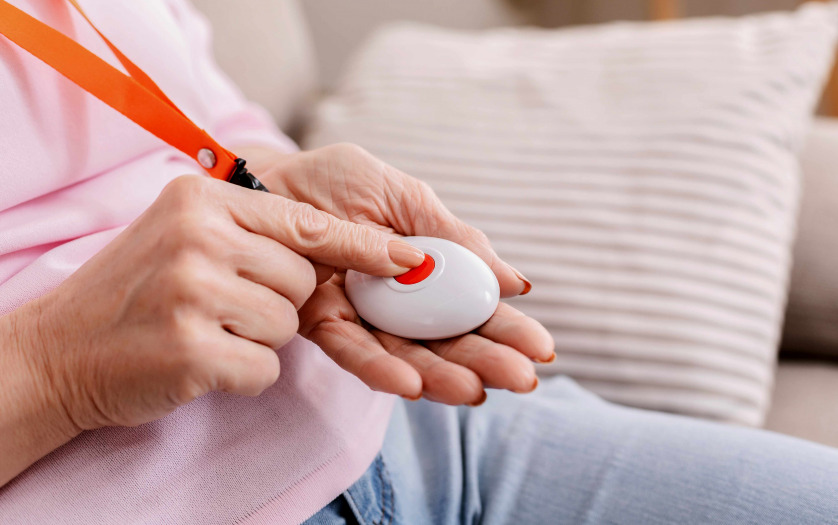
Senior woman hand pressing Alarm Button, closeup

An all-new personal emergency alarm that helps the elderly and people with disabilities stay safer and enjoy freedom and independence was released today by Australian assistive technology experts, mCare Digital.

The personal alarm, mCareMate, overcomes some of the practical problems encountered by people who use traditional personal alarms. It was developed after consultation with individuals, families and organisations which support the elderly and people with disabilities, and builds on mCare Digital’s existing suite of specialised caring technology solutions. It is suitable for individuals, families and care organisations.

“Factors such as ease of use, breadth and reliability of coverage and instant, real-time location visibility have all been high on the emergency personal alarm wish list,” said Peter Apostolopoulos, mCare Digital Managing Director.

The mCareMate specifically addresses those issues, combining the latest 4G, GPS, Wi-Fi and fall detection technology in a super easy-to-use, lightweight, water resistant unit. It offers instant visibility of wearer location, both indoors and outdoors, with coverage across 99.4% of the Australian population. It is entirely pre-configured so is ready to use on delivery, with no need for any technical or other specialised know-how – apart from hitting the ‘on’ switch.

Its emergency SOS function can be triggered automatically, for example if the wearer has a fall or by the wearer in case of distress. Families or carers can view location and other information from the mCareMate in real time, anytime, via an app on their mobile phone or via a dedicated online carer’s portal.

The mCareMate is available from 10th February 2020, from $299 for the device plus setup and activation and service plan.
You might also like

Person using computer with AI icons Person using computer with AI icons

AI tool unveils to improve understanding of autistic communication

People with autism have brains that are wired differently. This…

blind person hands using computer with braille display blind person hands using computer with braille display

Tanzania steps up efforts to improve access to assistive technology

As a child, Dr. Msafiri Kabulwa aspired to become an…

Icon Graphic Interface showing computer, machine thinking and AI Artificial Intelligence of Digital Robotic Devices Icon Graphic Interface showing computer, machine thinking and AI Artificial Intelligence of Digital Robotic Devices

Canada releases first standard on accessible and equitable AI

Accessibility Standards Canada announced on December 3 the publication of the CAN-ASC-6.2 – Accessible…

A young girl sits in a park, working on her laptop, surrounded by nature. Her colorful outfit and appearance reflect her energy and optimism. With a prosthetic leg, she proves that disability is no barrier to connecting with nature and embracing digitalization. This photo captures the harmony of technology, youth, and the outdoors—a powerful image of resilience and progress. A young girl sits in a park, working on her laptop, surrounded by nature. Her colorful outfit and appearance reflect her energy and optimism. With a prosthetic leg, she proves that disability is no barrier to connecting with nature and embracing digitalization. This photo captures the harmony of technology, youth, and the outdoors—a powerful image of resilience and progress.

Azerbaijan’s digital shift in disability assessments and payments

For years, people with disabilities in Azerbaijan carried a double…