Top of page
Technology

Wearable Robotic Exoskeleton Could Help People with Multiple Sclerosis

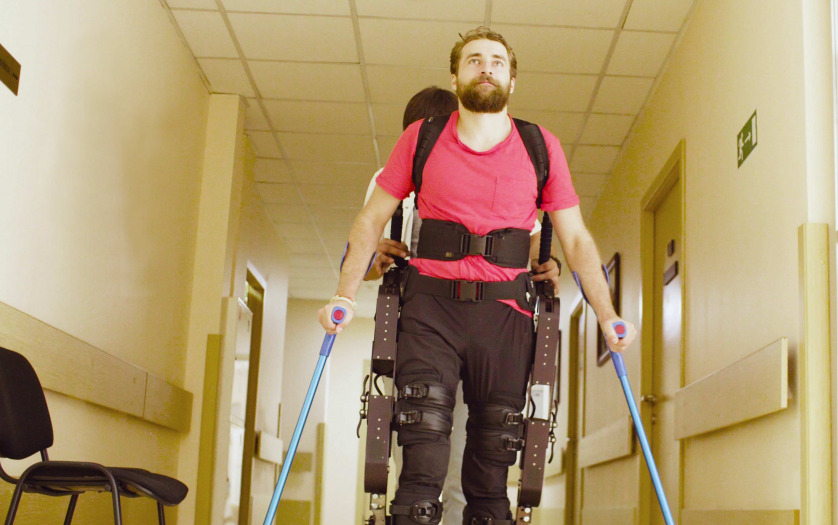
Young disable man in the robotic exoskeleton

UK scientists are to investigate whether wearable robots could help people with multiple sclerosis get more exercise.

Dr Siva Nair and his team at Royal Hallamshire Hospital in Sheffield will examine how powered exoskeletons – or robotic suits – might improve physical fitness in people with mobility issues caused by multiple sclerosis.

Research suggests people with MS should do moderate exercise for 30 minutes, three times a week. But many can find this difficult due to symptoms caused by the condition.

‘We all know how important exercise is,’ says Dr Nair. ‘A lack of it can cause heart disease, stroke, diabetes, obesity and depression. So we need to find a way to make it easier for people with advanced multiple sclerosis to take part in physical activity. Robotics is the natural step forward. By embracing this technology we are giving people who can’t walk the chance to exercise like everyone else.

‘We understand it’s not every day you see someone in a robot suit, and society might need to adjust to such a weird and wonderful sight. That’s why we’re also going to be observing the personal implications of keeping fit in this way – including whether the person wearing the exoskeleton feels it’s an accepted way to exercise.’


You might also like

Person using computer with AI icons Person using computer with AI icons

AI tool unveils to improve understanding of autistic communication

People with autism have brains that are wired differently. This…

blind person hands using computer with braille display blind person hands using computer with braille display

Tanzania steps up efforts to improve access to assistive technology

As a child, Dr. Msafiri Kabulwa aspired to become an…

Icon Graphic Interface showing computer, machine thinking and AI Artificial Intelligence of Digital Robotic Devices Icon Graphic Interface showing computer, machine thinking and AI Artificial Intelligence of Digital Robotic Devices

Canada releases first standard on accessible and equitable AI

Accessibility Standards Canada announced on December 3 the publication of the CAN-ASC-6.2 – Accessible…

A young girl sits in a park, working on her laptop, surrounded by nature. Her colorful outfit and appearance reflect her energy and optimism. With a prosthetic leg, she proves that disability is no barrier to connecting with nature and embracing digitalization. This photo captures the harmony of technology, youth, and the outdoors—a powerful image of resilience and progress. A young girl sits in a park, working on her laptop, surrounded by nature. Her colorful outfit and appearance reflect her energy and optimism. With a prosthetic leg, she proves that disability is no barrier to connecting with nature and embracing digitalization. This photo captures the harmony of technology, youth, and the outdoors—a powerful image of resilience and progress.

Azerbaijan’s digital shift in disability assessments and payments

For years, people with disabilities in Azerbaijan carried a double…