A new Horizon Europe project will bring together psychologists, disability experts, cultural institutions, designers, technologists and policymakers to rethink how people with learning disabilities participate in cultural life.
The INCLUDE-ID project will examine how botanic gardens, museums and other cultural institutions can become places where people with learning disabilities participate, contribute and enjoy culture on their own terms.
Launched at the IRCCS Eugenio Medea Scientific Institute in Italy, the four-year project brings together 10 leading organisations from seven European countries with expertise in learning disabilities, cultural participation, inclusive design, education, technology, artificial intelligence and public policy.
Running until August 2030, the project aims to help transform cultural institutions into more inclusive and adaptive environments that foster autonomy, participation and social inclusion for people with learning disabilities.
Through combining co-design, multisensory practices and adaptive digital technologies, including artificial intelligence, the project will work towards cultural experiences in which people with learning disabilities can participate not only as visitors, but also as co-creators and cultural mediators.
Over the next four years, INCLUDE-ID will map challenges and needs across European cultural institutions, co-design inclusive participation pathways, develop and validate adaptive technologies and test two complementary models: an inclusive visitor pathway for children and adolescents with learning disabilities and a mediator pathway supporting young adults with learning disabilities to act as cultural guides. The project will also develop training resources, policy recommendations and replicable frameworks to support wider uptake across Europe.
In Wales, the Cardiff team will be led by Professor Merideth Gattis and Dr Hana D’Souza from the Cardiff University Centre for Human Developmental Science. They will work with the National Botanic Garden of Wales, Learning Disability Wales, and the Welsh Centre for Learning Disability Inclusive Research, as well as other organisations.
Professor Merideth Gattis, principal investigator and project lead, said: “In Wales we will be working with several organisations to evaluate barriers and needs for improving inclusion for children and young people with learning disabilities and their families. We will also work with young people with learning disabilities to give them opportunities to guide visitors through gardens.”
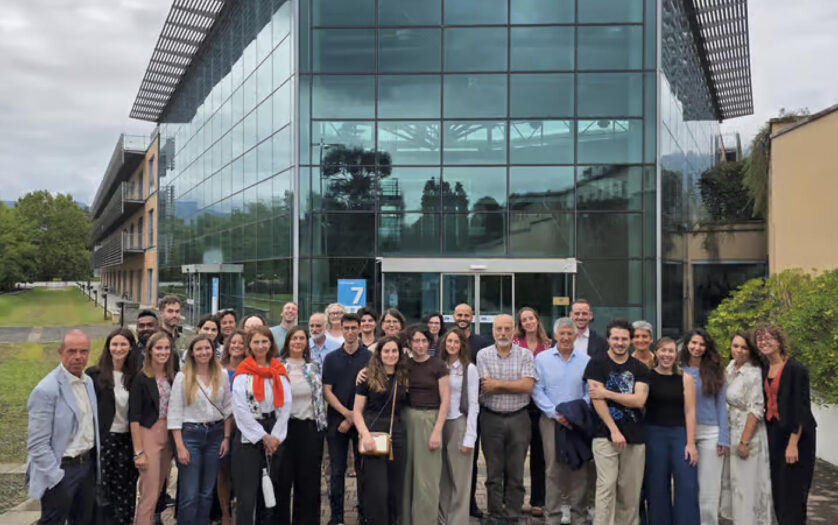
The consortium team for the INCLUDE-ID project at the project launch meeting in Bosisio Parini, Italy.