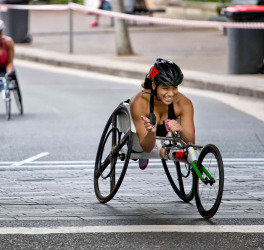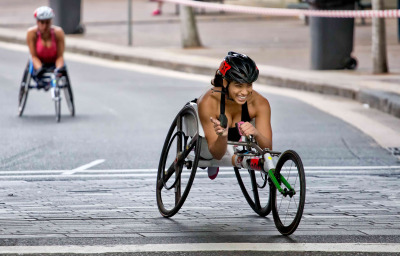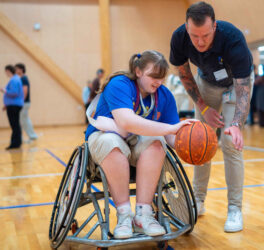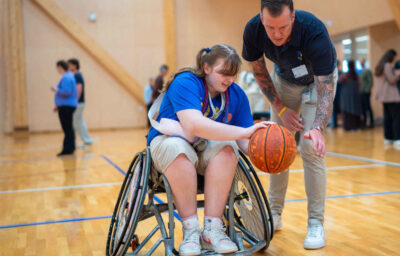
People living with a disability in the Darling Downs could gain access to a dedicated sport and physical activity hub in Toowoomba under a proposal led by researchers from The University of Queensland.
Professor Sean Tweedy from UQ’s School of Human Movement and Nutrition Sciences, said the hub would deliver 3 evidence‑based programs targeting physical health, mental wellbeing and social inclusion for children and adults with a disability across the region.
“After 2 years of consulting with more than 100 people including those with lived experience of disability, the message was consistent – disability services in the Darling Downs are fragmented, travel is excessive and access to specialised support is limited,” Professor Tweedy said.
“Australians with disability experience higher rates of preventable illness and lower wellbeing than people without disabilities.
“Those challenges are intensified in regional areas, where people want to be active and social but spend hours travelling to and from appointments.
“In addition to improving health outcomes, the Hub will enhance social inclusion, provide pathways to sport and sporting excellence and lower the cost of ongoing supports for people with severe disabilities.
“These are key outcomes for the local government, defence, health, sport education and insurance sectors, and we would love their support for our planned 5-year pilot program.”
The hub would also support talent identification ahead of the 2032 Olympic and Paralympic Games and provide a lasting Games legacy for the region.
Darling Downs Health has also provided in principle support for a disability sport and physical activity hub based in Toowoomba.
Southern Queensland Rural Health (SQRH) and UQ’s Rural Clinical School would contribute staff and resources.
SQRH Director Associate Professor Melissa Taylor said the proposed hub would also strengthen local skills.
“We will provide supervision support for students in allied health, specifically exercise physiology, physiotherapy, occupational therapy and speech therapy,” Dr Taylor said.
“The hub doesn’t only benefit people living with a disability, it supports the region by growing and training a highly skilled local workforce.”
If funded, the hub’s health and social data would be evaluated, potentially paving the way for similar hubs across regional Australia.
“This is a proposal, not a funded program,” Professor Tweedy said.
“There is nothing like this in regional Australia.
“It would be one location where clients build fitness and confidence, make connections and develop a sense of community belonging.’’