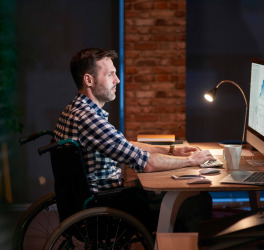
A study released by Lancaster University and the Work Foundation, Manchester Metropolitan University, and Universal Inclusion has sent shockwaves through the disability community, revealing a sharp decline in remote job opportunities that threatens to reverse years of progress in workplace inclusion in the UK.
The “Inclusive Remote and Hybrid Working Study” research shows that almost half (46%) of 1,221 survey participants wanted to work remotely all the time, yet the numbers of remote jobs in the UK have decreased drastically since the peak of the Covid-19 pandemic, with 50% fewer remote only roles advertised compared to 2020/21.
Remote and hybrid working remain more common than before the pandemic, but growth is slowing. In the year to April 2025, 17.8% of UK vacancies offered either fully remote (4.3%) or hybrid roles (13.5%), up from 3.1% pre-pandemic. However, fully remote jobs have fallen sharply since their peak, and growth in hybrid roles has stalled.
“The increased availability of remote and hybrid working since before the pandemic has improved many disabled people’s experience of work. Our findings indicate disabled employees gain significant benefits including improved mental and physical health, better work-life balance and increased productivity.
“However, companies mandating people to return to the office has seen remote-only opportunities plummet and this could prevent some disabled workers from returning and staying in work. At a time when the Government wants to get people working, disabled workers report that access to suitable homeworking roles can be the difference between working or not working.” said Dr Paula Holland from Lancaster University.
The UK Government has committed to supporting more persons with disabilities to remain in or return to work as part of its wider efforts to boost employment by two million people to an 80% employment rate. Persons with disabilities currently represent one in four workers in the workforce, but the disability employment gap – the difference between the employment rates of disabled and non-disabled people – remains at 29.8 percentage points.
A UK Government study indicates remote work could support people out of work claiming health and disability benefits. One in four respondents (25%) who said they are currently unable to work stated that they could do so if they worked remotely. The recent House of Lords Home-based Working Inquiry called on the Government to set out whether remote and hybrid working are being considered as part of existing initiatives to support people who are disabled or have long-term health conditions back into work.
The final report of the Inclusive Remote and Hybrid Working Study highlights remote and hybrid working as a key part of the solution to improving employment outcomes for disabled people. Key findings include:
- 64% of fully remote disabled workers said their work pattern positively affected their physical health, compared to 31% of those working remotely less than half the time
- 46% of participants wanted to work remotely all the time. There was also demand for hybrid working: 25% wanted to work from home four days a week and 27% for three days or less. Only 1.6% wanted to stop working from home
- Women, carers and people with multiple or severely limiting impairments/health conditions were particularly likely to report they only wanted to work from home
- 85% of participants said that having access to remote/hybrid working would be essential or very important if looking for a new job. 79% would not apply for a job without remote options
- Black and ethnic minority workers and less affluent workers were significantly less likely than white or more affluent workers to report remote/hybrid working had positive outcomes for their health and employment.
“Remote and hybrid working can benefit both employees and employers. The organisations we interviewed reported improved staff retention and recruitment as a result of implementing remote working policies including reduced sick leave and improved wellbeing. However, employers must ensure disabled workers have the resources and support they need. Over half of survey participants reported reasonable adjustments to support working from home had not been implemented, and black and ethnic minority workers reported significantly less positive outcomes.” Said Dr Paula Holland
“For many disabled workers, homeworking isn’t a ‘nice to have’ – it’s essential to be able to enter into, and remain in work. Our research shows strong demand for remote and hybrid work among disabled people, yet fully remote job vacancies have halved since the pandemic and growth in hybrid jobs has stalled.
“If the Government is serious about getting Britain working, it must make sure the right jobs are available by expanding access to flexible work. Threats to cut disabled people’s welfare will not support them into work if the jobs they need simply aren’t there.” Said Rebecca Florisson, Principal Analyst, from the Work Foundation at Lancaster University.