A trial to help improve the lives of Australians living with a debilitating spinal cord injury is a step closer with a $6.8 million Medical Research Future Fund grant.
Griffith University researchers, led by Professor James St John from the Clem Jones Centre for Neurobiology and Stem Cell Research within the Institute for Biomedicine and Glycomics, has raised a total of $14.3 million in federal, state and philanthropic funding making this a combined community project.
Professor St John said once the trial commences it will use world-first cell transplantation therapy whereby olfactory ensheathing cells from the nose will be prepared into specialised nerve bridges which are then transplanted into the injury site within the spinal cord.
“The trial will test the safety, feasibility and efficacy of an autologous olfactory cell nerve bridge transplantation combined with intensive long-term rehabilitation,” Professor St John said.
“The advantage of our cell transplantation therapy is that it can stimulate neural repair through multiple mechanisms.
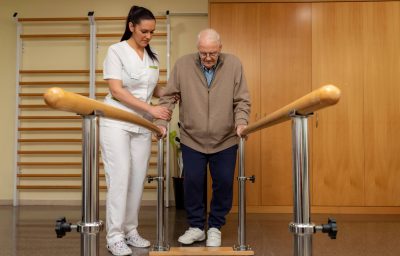
“Critically, once the cells have started the repair process, the participants in the trial will the undergo intensive long-term rehabilitation to encourage the nerve cells to find the right connections and to get those connections above threshold levels where they can hopefully provide functional improvements.”
Currently, there is no effective treatment for the more than 21,000 Australian’s living with a chronic spinal cord injury.
Worldwide, the number of people living with a spinal cord injury exceeds 20 million, with more than 900,000 new cases occurring annually.
Professor St John said: “We anticipate the therapy will improve structure within the spinal cord and that participants may regain some functional motor, sensory and/or autonomic activity.”
“Even minor improvements such as increased bowel and bladder control, breathing control, or trunk stability, can be transformative and improve quality of life.”
Acting Director, Institute for Biomedicine and Glycomics, Professor Lee Smith, welcomes this major funding boost for Professor St John and his team.
“This award showcases the outstanding capability of our researchers who are dedicated to translating their research into tangible benefits for the global community .”