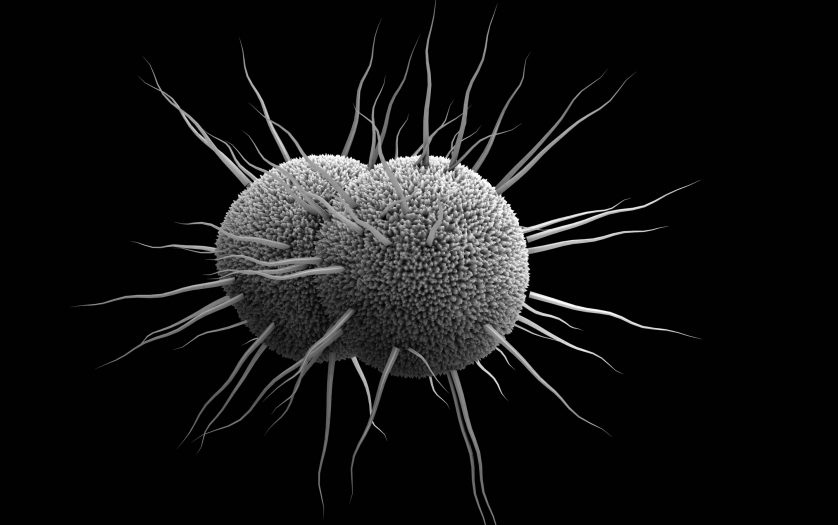
One in three children who suffer from bacterial meningitis live with permanent neurological disabilities due to the infection. This is according to a new epidemiological study led by Karolinska Institutet and published in leading medical journal JAMA Network Open.
For the first time, researchers have identified the long-term health burden of bacterial meningitis. The bacterial infection can currently be cured with antibiotics, but it often leads to permanent neurological impairment. And since children are often affected, the consequences are significant.
“When children are affected, the whole family is affected. If a three-year-old child has impaired cognition, a motor disability, impaired or lost vision or hearing, it has a major impact. These are lifelong disabilities that become a major burden for both the individual and society, as those affected need health care support for the rest of their lives,” says Federico Iovino, associate professor in Medical Microbiology at the Department of Neuroscience, Karolinska Institutet, and one of the authors of the current study.
By analyzing data from the Swedish quality register on bacterial meningitis between 1987 and 2021, the researchers have been able to compare just over 3,500 people who contracted bacterial meningitis as children with just over 32,000 matched controls from the general population. The average follow-up time is over 23 years.
The results show that those diagnosed with bacterial meningitis consistently have a higher prevalence of neurological disabilities such as cognitive impairment, seizures, visual or hearing impairment, motor impairment, behavioral disorders, or structural damage to the head.
The risk was highest for structural head injuries – 26 times the risk, hearing impairment – almost eight times the risk, and motor impairment – almost five times the risk.
About one in three people affected by bacterial meningitis had at least one neurological impairment compared to one in ten among controls.
“This shows that even if the bacterial infection is cured, many people suffer from neurological impairment afterwards,” says Federico Iovino.
With the long-term effects of bacterial meningitis identified, Federico Iovino and his colleagues will now move forward with their research.
“We are trying to develop treatments that can protect neurons in the brain during the window of a few days it takes for antibiotics to take full effect. We now have very promising data from human neurons and are just entering a preclinical phase with animal models. Eventually, we hope to present this in the clinic within the next few years,” says Federico Iovino.
The research was funded by Merck & Co (in Sweden MSD).