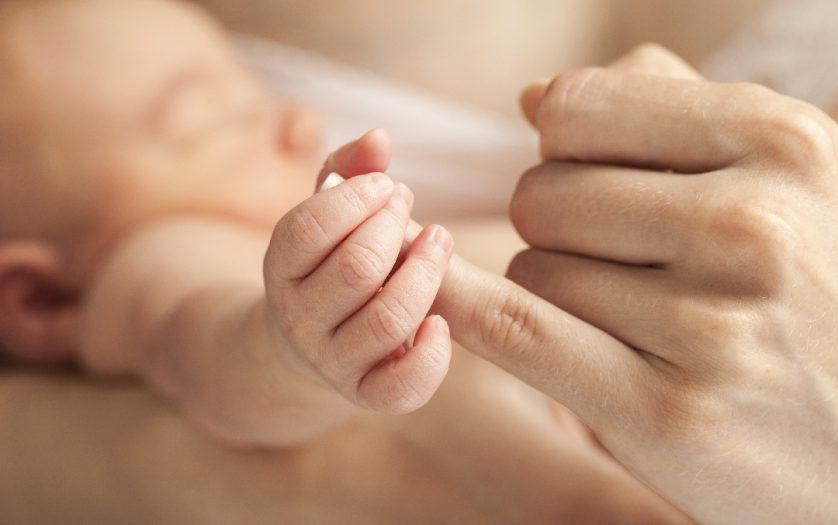
One of the most common causes of disability or death in newborns is a lack of oxygen or blood flow in the brain during labor or delivery.
The condition, known as hypoxic-ischemic encephalopathy (HIE), can result in severe brain damage, which is why researchers at Case Western Reserve University School of Medicine and University Hospitals Rainbow Babies & Children’s Hospital (UH Rainbow) are studying the condition to evaluate how HIE is treated and develop new, more effective options.
HIE, usually caused by complications with the umbilical cord, uterine tearing, blood circulation problems in the placenta and more, can result in lifelong disabilities. Currently, the only treatment for HIE is hypothermia, or lowering the infant’s body temperature to reduce the metabolic rate and inflammation in the brain.
But according to new research from Case Western Reserve and UH Rainbow published in Pediatric Research, this approach doesn’t reverse brain damage caused by HIE.
“Hypothermia reduces the brain injury, but does not cure the baby,” said senior author Cynthia Bearer, professor at the School of Medicine and chief of neonatology at UH Rainbow. “We are studying why the HIE injury remains after hypothermia because it did not reverse the damage. It’s a common condition that affects between one and three out of every 1,000 infants.”
During infant brain development, many processes rely on the function of lipid rafts—components of cell membranes that act as messengers to bring proteins together and signal cell behavior. The research team believed that, because lipid rafts play a critical role in brain development, they may also hold the answer to reverse brain damage caused by HIE.
By examining lipid rafts in rat models, the researchers found an increase in the percentage of a protein called L1 cell adhesion molecule. This increase was found in both sides of the brain cerebellum. The cerebellum plays a large role in developing motor, cognitive and emotional functions in babies.
“The proportion of the protein in lipid rafts increased by seven-fold in some cases. These changes persisted after hypothermia,” said Bearer, who is also the William and Lois Briggs Chair in Neonatology. “The same increase in the proportion of L1 protein in lipid rafts occurred even when the research models were not treated by hypothermia, which shows hypothermia did not reverse this effect of HIE.”
Bearer said their findings show that hypothermia alone is not an effective treatment for reversing the effects of HIE and supports the team’s rationale that lipid rafts may be a target for more effective treatment.
For example, the researchers say one possible intervention strategy worth further study could be dietary, specifically focusing on a nutrient called choline. Choline is found in some foods, especially egg yolks, and plays a key role in brain development and lipid rafts.
“This study is the first of its kind to look at lipid rafts and their involvement in HIE,” Bearer said. “I am encouraged that these results will lead to more effective interventions to prevent brain injury.”