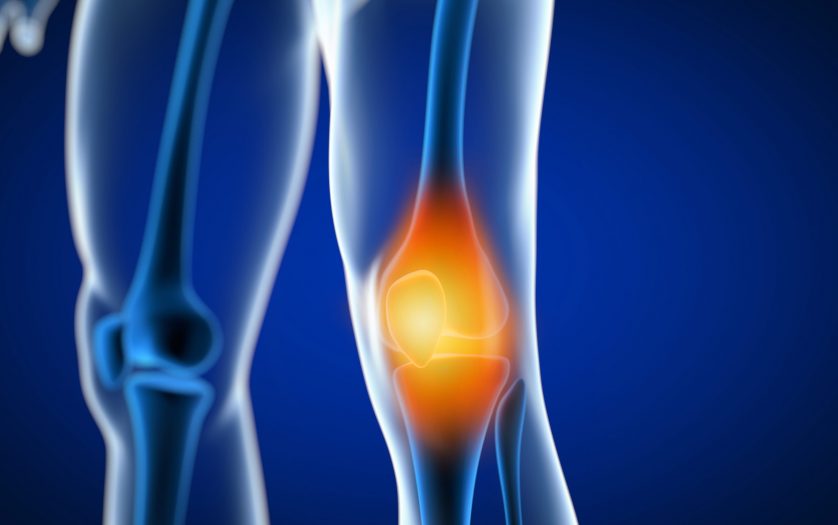
An under-used type of knee surgery in younger patients – a procedure called a high tibial osteotomy – may reduce the need for total knee replacement, according to new research from Western University.
“High tibial osteotomy is a knee surgery aimed at younger patients in the earlier stages of knee osteoarthritis. One of its goals is to prevent or delay the need for knee replacement,” said coauthor Trevor Birmingham, PhD, professor and Canada Research Chair in Musculoskeletal Rehabilitation in the Faculty of Health Sciences at Western. “In some ways, it’s like performing a front-end alignment on your car to stop asymmetric wear on your tires and increase their longevity.”
Knee osteoarthritis is a common cause of pain and disability and puts tremendous burden on health care systems. Total knee replacement is frequently performed on older patients with end-stage disease and limited mobility.
In Canada, rates of total knee replacement are high and increasing, while rates of high tibial osteotomy are low and decreasing. One reason for this is the perception that high tibial osteotomy is not warranted if the joint is going to be replaced soon afterwards. The study’s findings, published in CMAJ (Canadian Medical Association Journal), contradict this perception.
Of patients in this study getting high tibial osteotomy in London, Ontario (643 knees in 556 patients), 95 per cent did not need a total knee replacement within five years; 79 per cent did not get a total knee replacement within 10 years. Even in patients traditionally not considered ideal candidates for high tibial osteotomy (e.g., women and patients with later-stage disease), about 70 per cent did not get a knee replacement within 10 years.
The procedure is particularly suitable for people who are younger, have less severe joint damage and who may be more physically active. “Those patients especially contribute to the burden of knee osteoarthritis,” said Codie Primeau, the study’s lead author. “There is a treatment gap between exhausting nonoperative treatments and appropriateness for joint replacement, resulting in many years of pain, lost productivity and associated costs.”
“Given these findings, high tibial osteotomy may be underused in Canada and could be performed more often to delay or prevent the need for total knee replacement,” said coauthor Dr. Robert Giffin, professor of surgery at Western’s Schulich School of Medicine & Dentistry.