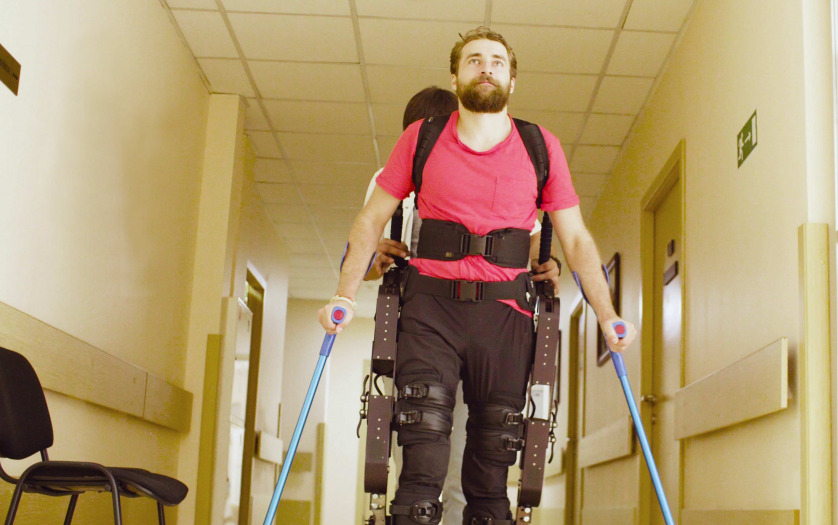
A team of New Jersey researchers has shown that gait training using robotic exoskeletons improved motor function in adolescents and young adults with acquired brain injury.
The article, “Kinetic gait changes after robotic exoskeleton training in adolescents and young adults with acquired brain injury”, was published October 28, 2020 in Applied Bionics and Biomechanics.
Acquired brain injury often results in hemiparesis, causing significant deficits in balance and gait that adversely affect functional ambulation and participation in activities of daily living. Gait training using robotic exoskeletons offers an option for motor rehabilitation in individuals with hemiparesis, but few studies have been conducted in adolescents and young adults. Findings from a preliminary study in this age group show promise for this intervention, according to Drs. Karunakaran and Nolan.
Participants included seven individuals (aged 13 to 28 years) with acquired brain injury (ABI) and hemiparesis and one healthy control. The ABI group included individuals with brain injuries due to anoxia, trauma, and stroke. All participants received 12 45-minute sessions of high-dose, repetitive gait training in a robotic exoskeleton (EksoGT, Ekso Bionics, Inc.) over a 4-week period. The gait training was administered by a licensed physical therapist supervised by a member of the research team.
“At the end of the 4-week training, participants had progressed to a more normal gait pattern,” said Dr. Karunakaran, “including improved loading, a longer step length and faster walking speed” Although results are promising, Dr. Nolan acknowledged the limitations of the study, including small sample size and lack of a control group: “Further study is needed to confirm the training effect in this age group with ABI, optimal dosing for the training protocol, and the durability of functional improvements.”