A new test can detect glaucoma progression 18 months earlier than the current gold standard method, according to results from a UCL-sponsored clinical trial.
The technology, supported by an artificial intelligence (AI) algorithm, could help accelerate clinical trials, and eventually may be used in detection and diagnostics, according to the Wellcome-funded study published today in Expert Review of Molecular Diagnostics.
Lead researcher Professor Francesca Cordeiro (UCL Institute of Ophthalmology, Imperial College London, and Western Eye Hospital Imperial College Healthcare NHS Trust) said: “We have developed a quick, automated and highly sensitive way to identify which people with glaucoma are at risk of rapid progression to blindness.”
Glaucoma, the leading global cause of irreversible blindness, affects over 60 million people, which is predicted to double by 2040 as the global population ages. Loss of sight in glaucoma is caused by the death of cells in the retina, at the back of the eye.
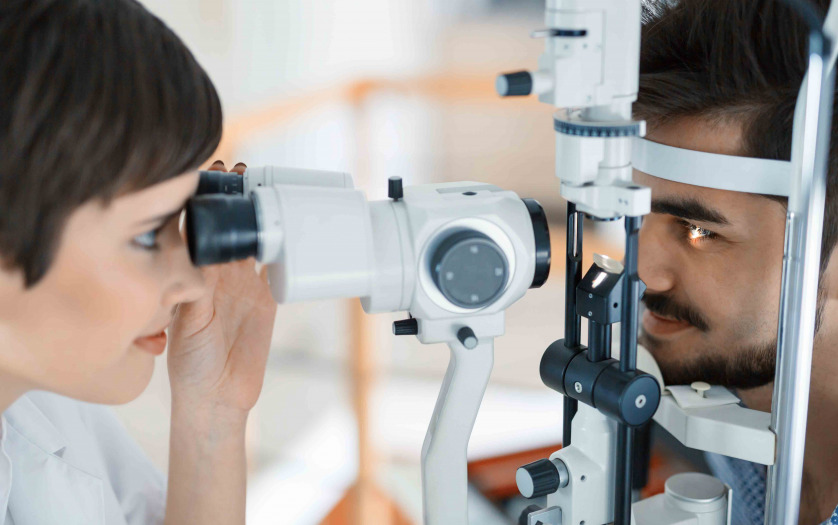
The test, called DARC (Detection of Apoptosing Retinal Cells), involves injecting into the bloodstream (via the arm) a fluorescent dye that attaches to retinal cells, and illuminates those that are in the process of apoptosis, a form of programmed cell death. The damaged cells appear bright white when viewed in eye examinations – the more damaged cells detected, the higher the DARC count.
One challenge with evaluating eye diseases is that specialists often disagree when viewing the same scans, so the researchers have incorporated an AI algorithm into their method.
“These results are very promising as they show DARC could be used as a biomarker when combined with the AI-aided algorithm,” said Professor Cordeiro, adding that biomarkers – measurable biological indicators of disease state or severity – are urgently needed for glaucoma, to speed up clinical trials as the disease progresses slowly so it can take years for symptoms to change.
The AI-supported technology has recently been approved by both the UK’s Medicines and Healthcare products Regulatory Agency and the USA’s Food and Drug Administration as an exploratory endpoint for testing a new glaucoma drug in a clinical trial.
The researchers are also assessing the DARC test in people with lung disease, and hope that by the end of this year, the test may help to assess people with breathing difficulties from Covid-19.