Researchers are calling for an overhaul of Australia’s disability employment systems to help people with Down syndrome find, keep and enjoy work.
Down Syndrome Australia and Swinburne University of Technology researchers say people with Down syndrome can thrive in award-wage jobs when the right support is in place.
But new research shows current systems and funding models are not providing the right type of support, leading to missed opportunities for both potential employees and workplaces.
The study’s authors evaluated Down Syndrome Australia’s Employment Connections Service (ECS), a specialist employment model built around four key stages: discovery, job development, workplace training and ongoing support.
Over three years, the service supported more than 140 people with Down syndrome and other intellectual disability into open employment at award wages.
However, the research found a significant mismatch between what evidence shows works and what current funding systems support. Existing Commonwealth funding arrangements are not structured in a way that enables the delivery of long-term, personalised employment support, particularly for people working lower hours.
Professor Erin Wilson, Director of Swinburne’s Centre for Social Impact, says the findings challenge conventional thinking about disability employment.
“For too long, success has been measured by whether someone gets a job, rather than whether they can build a sustainable and meaningful career,” she says.
“People with Down syndrome want the same things that most Australians want from work: independence, purpose, financial security and social connection.
“What this research highlights is that ongoing support for both employees and employers is often the difference between someone simply getting a job and genuinely thriving in one.”
The report comes at a time when disability employment participation remains a major national challenge, with people with intellectual disability continuing to experience some of the lowest levels of workforce participation in Australia.
Darryl Steff, Chief Executive Officer of Down Syndrome Australia, says the findings provide a clear roadmap for reform.
“We know people with Down syndrome and other intellectual disability thrive in open employment when they receive the right support,” he says.
“The challenge is that the current system often doesn’t fund the very things that make employment successful, particularly lower work hours and ongoing support.
“If Australia is serious about improving disability employment outcomes, we need funding models that reflect what works in practice, not just what works on paper.”
The research is backed by real-world success stories.
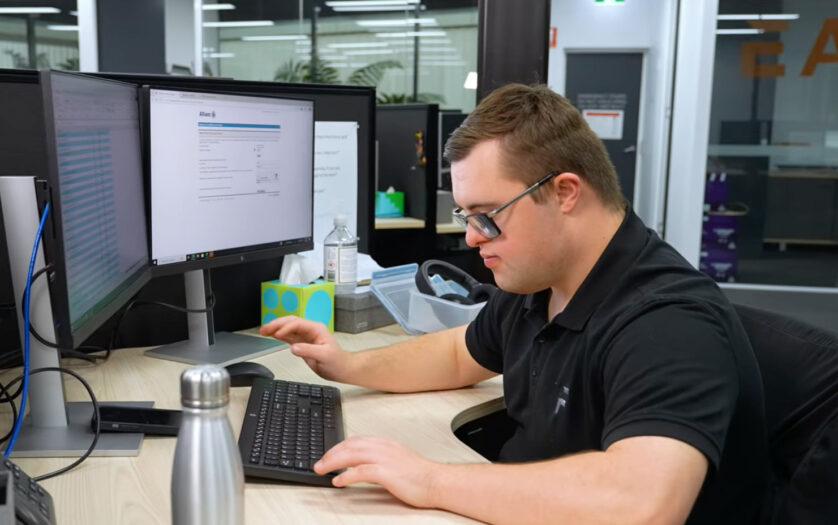
Through the ECS, Jack has built confidence in his role as a Compliance Officer at Fleet Plant Hire, where he makes more than 150 calls a day. The role was designed around Jack’s computer skills and his passion for working with people.
“It’s a nice way to be part of a team who knows who I am and helps me be myself. Having a job makes me feel really good. It makes me feel confident and it’s good for my independence.”
Rachel has also found meaningful employment through the program, working at Perth Children’s Hospital where she provides administrative support, prepares clinic materials and supports the hospital’s Trisomy 21 clinic.
Researchers say Jack and Rachel’s experiences demonstrate the transformative impact that personalised and ongoing employment support can have, not only on employment outcomes but on confidence, independence and social inclusion more broadly.
The report identifies a series of reforms needed to create a more sustainable employment system, including better alignment between disability and employment funding programs and greater support for people with lower assessed work capacity.