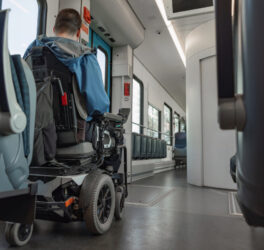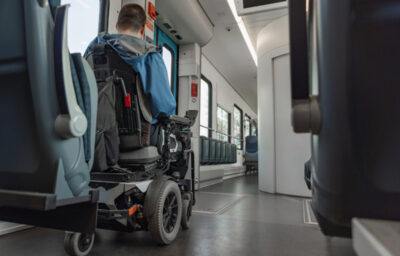
The impacts of transport challenges on disabled people’s lives can be devastating, a recently published research report shows.
The report “Disabled people’s experiences of transport in Aotearoa New Zealand” highlights the ongoing challenges disabled people face using transport in New Zealand and the need for a paradigm shift in the way that the transport sector provides for disabled people.
It is the result of a collaborative research project involving disabled people and transport consultants. The Disabled Persons Assembly worked with transport consultants MRCagney, Cawthorn Consulting, and academic Dr Lisa Stafford from the University of Tasmania. The research included surveys, workshops, a review of literature, and recommendations for policy and practice.
“Many of the stories reported in the research are really confronting,” MRCagney Principal Researcher Dr Bridget Doran says. “Disabled people tell of not being able to use footpaths, extensive abuse of mobility parking spaces, and challenges using public transport including buses not stopping to collect them.”
“Taxis are expensive but necessary for many disabled people. There’s a Total Mobility scheme which provides subsidised taxis, but even with this subsidy, traveling by taxi is unaffordable for many. Then mobility taxis are not always available and they need to be booked in advance so travel cannot be spontaneous.
“Ultimately the impact of transport challenges on disabled people’s lives can be devastating.”
DPA Chief Executive Prudence Walker says the impact is on all aspects of disabled people’s lives.
“Disabled people’ssocialand well-being status is demonstrably worse than their non-disabled peers across: income, educational achievement, health, wellbeing andsocialparticipation indicators.
“Transport is key to participating in the community; to accessing jobs, schools, healthcare, leisure, meeting with friends, and just living life.
“Every unusable footpath, bus that doesn’t stop, unavailable and unaffordable taxi, is yet another barrier to disabled people’s participation.
“What this report illustrates is a transport sector that often excludes disabled people and is a significant contributor to the inequities disabled people experience.”
“To make meaningful change, engineers and planners need to work with disabled people, as we have worked with MRCagney in the research for this report.”
The report recommends a paradigm shift in the way that the transport sector provides for disabled people.
“Inclusive access should be at the heart of transport policy,” Dr Doran says.
“Disabled people’s participation should be measured, and their trips compared to those of non-disabled people so that accessibility barriers can be identified and removed.”