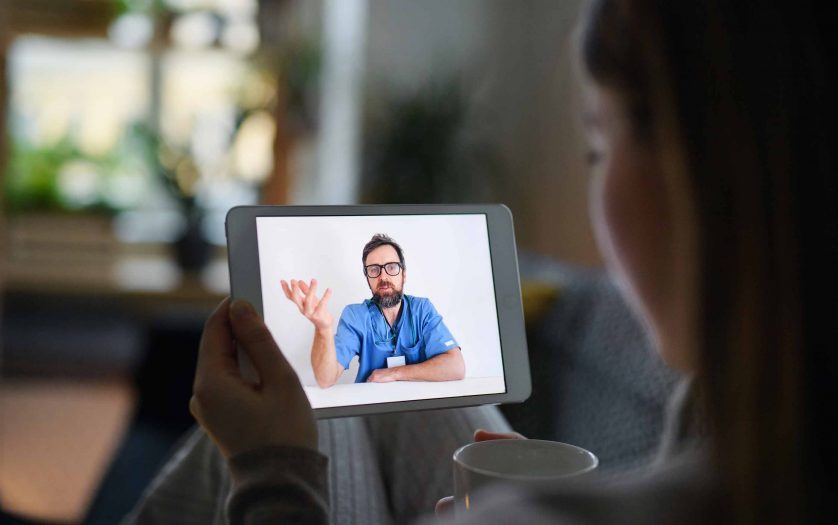
While many people skipped regular health check-ups during the COVID-19 pandemic, new research indicates that people with multiple sclerosis (MS) used online telehealth services more frequently to keep in contact with their health care providers and were highly satisfied with the outcome.
The Kessler Foundation study, published in Archives of Physical Medicine and Rehabilitation, examined the effects of the COVID-19 pandemic on health care among individuals with MS — a chronic and progressive neurological disorder and the leading cause of non-traumatic disability among young and middle-aged adults. Researchers found high rates of health care disruption among individuals with MS and neurologically healthy individuals, but also found that people with MS were more likely to utilize telehealth services than people without MS.
“The findings suggest that telehealth services were well liked during the pandemic. Because many individuals with MS have physical disability that may make travel more difficult, temporary expansions of telehealth coverage should be made permanent after the pandemic in order to expand access and reduce health care disparities,” said lead author Michelle Chen, a core member of Rutgers Institute for Health, Health Care Policy and Aging Research and neurology instructor at Robert Wood Johnson Medical School.
Using online survey data collected between September and October 2020, researchers analyzed rates of health care disruptions, such as missing or canceling appointments and experiencing delays, and telehealth use for medical care and mental health care of individuals with and without MS.
According to the study, telehealth appointments almost doubled the rates of in-person medical care appointments and rates of mental telehealth appointments were more than five times higher than in-person appointments. Since individuals with MS require regular medical care, the onset of medical facility closures and social distancing measures during the early onset of the pandemic was cause for concern because health care providers understood that this would pose a significant impact on the health of this population.
“The current study significantly contributes to our understanding of health care utilization during the COVID-19 pandemic,” said corresponding author Helen Genova, associate director of the Center for Autism Research at Kessler Foundation and research assistant professor at Rutgers University-New Jersey Medical School.
More information is needed, researchers say in order to gather data on the health insurance status of participants, as well as qualitative interviews with participants in order to further understand the nature of the health care disruptions.