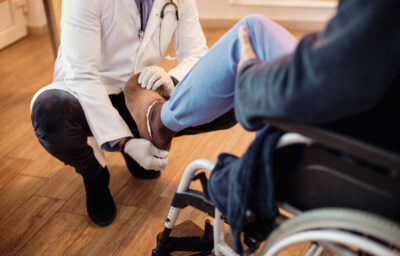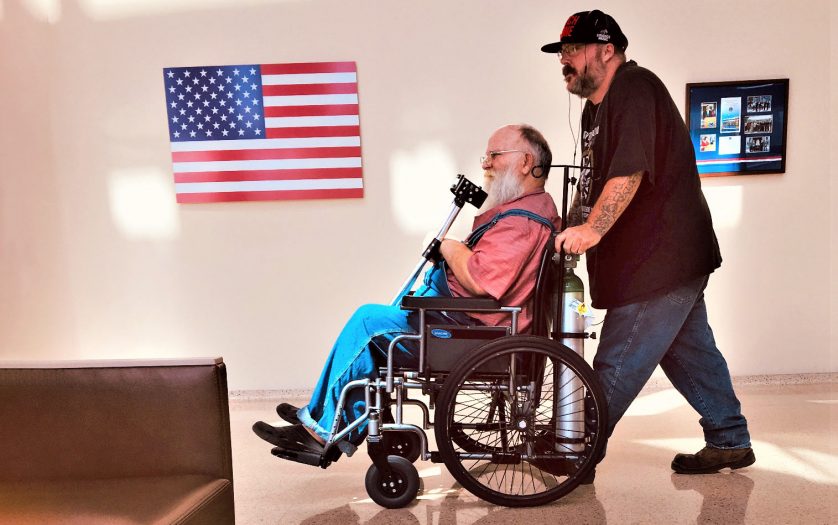
The Center for Leadership in Disability (CLD) in Georgia State University’s Mark Chaffin Center for Healthy Development and School of Public Health has entered a $2.91 million cooperative agreement from the Centers for Disease Control and Prevention (CDC) to lead a Disability and Health State Program.
The collaboration will address statewide and public health district-level health needs among adults with intellectual and developmental disabilities and adults with mobility limitations in the State of Georgia to support inclusive state programs, communities, and health care for people with disabilities.
Dr. Erin Vinoski Thomas, research assistant professor in the School of Public Health and associate director of the Center for Leadership in Disability, will be the program director of the five-year project.
“I am thrilled that our center, along with our diverse group of partners, is bringing this much-needed resource to Georgia’s disability community,” said Dr. Vinoski Thomas. “Georgia joins nine other states funded through this mechanism. Together, the state programs have an opportunity to advance health equity for people with disabilities throughout the nation.”
According to the CDC’s National Center on Birth Defects and Developmental Disabilities, 61 million adults in the United States live with a disability and the percentage of people living with disabilities is highest in the South. More than 2.1 million Georgians, or 28 percent of adults in the state, have a disability, including mobility, cognition, sensory, and other disabilities.
The program will implement and evaluate activities across Georgia, including needs assessments, training for healthcare providers, health promotion interventions, and solutions to policy, system and environmental barriers to health for people with disabilities, with the goal of reducing health disparities experienced by adults with intellectual and development disabilities and those with mobility limitations.
For more information, contact Dr. Vinoski Thomas at evinoski@gsu.edu.