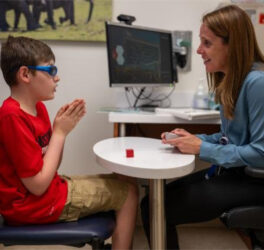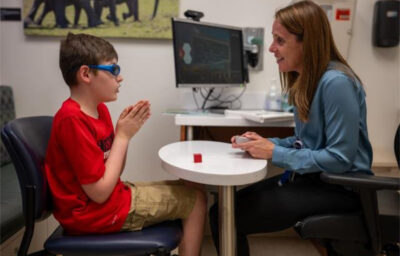
Children with a devastating genetic disorder characterized by severe motor disability and developmental delay have experienced sometimes dramatic improvements in a gene therapy trial launched at UCSF Benioff Children’s Hospitals.
The trial includes seven children aged 4 to 9 born with deficiency of AADC, an enzyme involved in the synthesis of neurotransmitters, particularly dopamine, that leaves them unable to speak, feed themselves or hold up their head. Six of the children were treated at UCSF and one at Ohio State Wexner Medical Center.
Children with a devastating genetic disorder characterized by severe motor disability and developmental delay have experienced sometimes dramatic improvements in a gene therapy trial launched at UC San Francisco Benioff Children’s Hospitals.
The trial includes seven children aged 4 to 9 born with deficiency of AADC, an enzyme involved in the synthesis of neurotransmitters, particularly dopamine, that leaves them unable to speak, feed themselves or hold up their head. Six of the children were treated at UCSF and one at Ohio State Wexner Medical Center.
Children in the study experienced improved motor function, better mood, and longer sleep, and were able to interact more fully with their parents and siblings. Oculogyric crisis, a hallmark of the disorder involving involuntary upward fixed gaze that may last for hours and may be accompanied by seizure-like episodes, ceased in all but one patient. Results appear July 12, 2021, in Nature Communications.
Just 135 children worldwide are known to be missing the AADC enzyme, with the condition affecting more people of Asian descent.