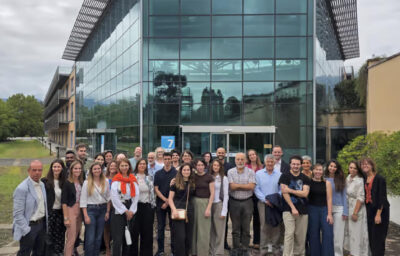
A new study by the international network Women In Supramolecular Chemistry (WISC) has highlighted the equality, diversity and inclusion (EDI) issues faced by women and marginalized groups working within that field.
The network has also set out a ‘calling in’ approach to address these issues.
The study, led by Dr. Jennifer Leigh and Dr. Jennifer Hiscock (both University of Kent) alongside WISC’s wider team of international researchers, found that both men and women in the supramolecular community wanted to see more mentoring opportunities and more visibility for women and marginalized groups. There is a desire for more guidance during the transition from postdoctoral researcher to independent Principal Investigator, to ensure women can be retained and progress in supramolecular chemistry.
Furthermore, it was established that there is the need for a space to share concerns around career breaks, parenting, and the demands of balancing work with other aspects of life. Shared lived experiences documented in the survey showed differences in experiences between men and women taking career breaks or parental leave, with women reporting obstacles in progression and increased pressures upon return. The men surveyed did not note problems upon return.
WISC is following up on the study with a mentoring scheme to actively support the needs of the supramolecular chemistry community and will continue its approach to ‘call in’ colleagues to act together to address EDI issues. ‘Calling in’ is the gentler act of alerting peers to their behavior with compassion and guidance, as opposed to ‘calling out’ which usually refers to publicly pointing out oppressive behavior. A second survey exploring experiences through COVID-19 (open to the supramolecular community) is currently underway as ongoing research continues.
It is well documented that women in science, technology, engineering, and mathematics (STEM) academia are disproportionately affected by funding structures, academic culture, research environments and caring responsibilities, which has been further implicated by the COVID-19 pandemic. Culture and other factors such as disability, ethnicity and race, are also noted by the study team as marginalizing barriers. WISC, which was formed in 2019 as an area specific international community, hopes to bring change to the EDI issues experienced in supramolecular chemistry through its network.
While the study was carried out specifically in the supramolecular chemistrycommunity, the team hope that new EDI approaches could be adopted in other fields. Dr. Leigh said: ‘Our strategy of calling in and rigorous social science research is not field-specific. By sharing our approach and results, we hope that our work may act as a framework to those within other fields and disciplines who are keen to tackle EDI issues.’
Dr. Hiscock said: ‘WISC is only at the beginning of its work. When we launched the network, we were cautious of projecting our own experiences and assumptions onto others, therefore bringing a social science approach into our research ensured rigor, validity and ethics. ‘Calling in’ invites individuals to discuss something that might be uncomfortable in a safe environment without the fear of getting it wrong, and then pulls together the community as a whole to make positive changes. We look forward to continuing to bring change in the community.’