The causes of sensorimotor disability prevalent among people with autism could pave the way for better treatment and management in the future, say psychologists.
Publishing findings in the leading journal Brain, the scientists from Exeter and Bath’s universities present fresh evidence that sensorimotor difficulties associated with autism are likely caused by several complex and precise neurobiological processes, including differences in the way autistic people perceive the world around them.
Common sensorimotor features associated with autism can include sensory overload and impaired hand-eye coordination but also general clumsiness. In addition to the well-documented challenges traditionally associated with autism—notably in social communication and interaction and restricted and repetitive patterns of behaviors—these impairments represent a major hurdle for individuals and typically will last throughout their lives.
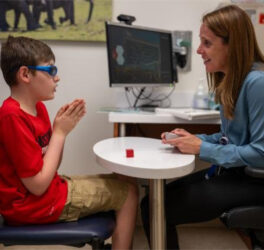
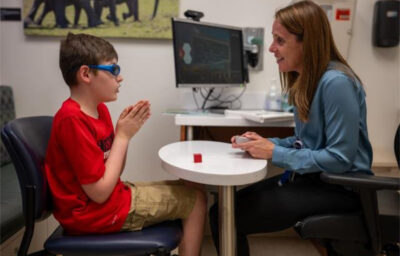
Yet, despite this, surprisingly little is known about the origins or mechanisms underlying these behavioral traits and their specific impacts on an individual’s quality of life. For this study, researchers used state-of-the-art mobile eye-tracking and motion capture technology to understand more about the causes of these difficulties and how they might be better managed.
Enlisting over 150 people, both with and without autism, tested a number of processes and mechanisms associated with sensorimotor difficulties. Most significantly, they found that many previously thought processes to underpin these movement difficulties in autism actually do not appear to be impaired. The research is part of a South West Doctoral Training Partnership studentship in affiliation with the ESRC and was led by Tom Arthur—a Ph.D. student at both the universities of Exeter and Bath.
He explains: “This study looked at how individuals control their hand-eye movements when picking up and lifting things—anyone who’s lifted an empty suitcase they thought was full of clothes will know that we usually do this in a very predictive way.
“Our results showed that autistic people lift new objects in just as predictive a way as non-autistic people. These findings go against many existing research theories and indicate that previous conclusions in the field may have been a bit too broad or simplistic. This is important because many daily living skills and behaviors depend on an individual’s ability to predict the world and act upon their prior expectations”.
Autism is a neurodevelopmental condition diagnosed in 1- 2% of individuals typically based on persistent difficulties with social communication and interaction and/or restricted and repetitive patterns of behaviors, activities, or interests. Also, sensorimotor impairments are considered as ‘cardinal’ features of autism.